
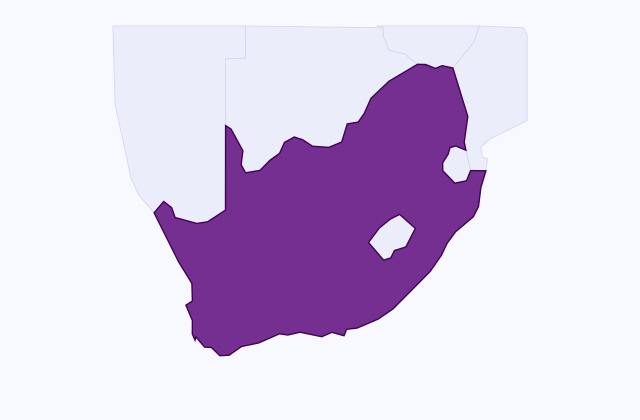
The country in brief

Facebook · @BasicEd
Official account
The South African National Department of Basic Education. Handling all education matters from ECD to Grades R-12. Visit our website: and follow us on X @DBE_SA. email info@dbe.gov.za
(new window)
Facebook · @CityofCT
Official account
News, events and information about Cape Town and its people. Making progress possible. Together.
(new window)
Facebook · @DoJCD
Official account
VISION: An accessible justice system that promotes constitutional values.
(new window)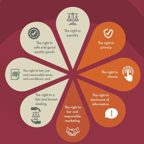
Facebook · @NationalConsumerCommission
Official account
The National Consumer Commission (NCC) is the primary regulator of consumer-business interaction in South Africa, and was created by government under the auspices of the Department of Trade, Industry and Competition (DTIC).
(new window)
Facebook · @SAHumanRightsCommission
Official account
The South African Human Rights Commission is the national institution established to support constitutional democracy.
(new window)
Facebook · @StatsSA
Official account
Welcome to the official Facebook page of Statistics South Africa. Sharing with you the latest official social and economic statistics.
(new window)
Facebook · @TheSouthAfricanJudiciary
Official account
The Official Facebook Page of The South African Judiciary
(new window)
LinkedIn · @financial-sector-conduct-authority
Official account
The FSCA's mandate is to enhance the efficiency and integrity of financial markets; promote fair customer treatment by financial institutions; provide financial education and promote financial literacy; and assist in maintaining financial stability in South Africa. This is in line with the Twin Peaks model of financial sector regulations, as envisioned in the Financial Sector Act 2017 (FSRA).
(new window)
LinkedIn · @governmentza
Official account
The official South African Government account managed by GCIS, offering easy access to public information and services.
(new window)
YouTube · @ParliamentofRSA
Official account
This is the official Parliament of the Republic of South Africa YouTube channel for all official videos produced by Parliament.
(new window)
Facebook · @DemocraticAlliance
NGO / charity
South Africa's second-largest political party. Committed to building one nation with one future.
(new window)
LinkedIn · @national-institute-for-communicable-diseases-nicd
Research / university
The National Institute for Communicable Diseases (NICD) is the national public health institute of South Africa, providing reference microbiology, virology, epidemiology, surveillance and public health research and training to support the government’s response to communicable disease threats. The NICD assists in the planning of policies and programmes to support communicable disease control and elimination efforts, and provides numerous specialised diagnostic services. A critical role of the NICD is to respond to outbreaks through the Outbreak Response Unit and the Emergency Operations Centre…
(new window)
LinkedIn · @saflii
Research / university
SAFLII (Southern African Legal Information Institute) is a donor-funded project that provides free online access to law including case law, legislation and journal articles. It also includes English translations of a number of key Afrikaans judgments. More than just a website, SAFLII is a burgeoning online community with an active social media presence. SAFLII connects to and supports a network of free and open access to law publishers throughout Africa. The Southern African Legal Information Institute (SAFLII) collects and publishes legal materials from Southern and Eastern Africa for free…
(new window)
Marriage · Partnerships and cohabitation · Same-sex marriage · Religious ceremony · Wedding customs and ceremonies · Matrimonial property and inheritance · Divorce
Names · Adoption · Assisted reproduction · Child custody and parental responsibility · Step-families · Inheritance · Early childhood care

Contraception · Abortion · Parents: a teenager’s first relationship · Sexual orientation · Drugs and controlled substances · Alcohol and tobacco

Consent and age of consent · Domestic violence · Female genital mutilation · Sexual offences committed abroad

Data protection · Privacy · Image rights · Speech and online harassment · Copyright · Identity theft · Online shopping · Romance scams

Pregnancy · Periods and period products · Sex therapy · Mental health · Dental care · HIV and AIDS · Hepatitis B · HPV
South African family law distinguishes between civil marriages, civil unions, customary marriages and unmarried partnerships. The differences affect proof, property, and what happens on separation or death. A customary marriage is not invalid merely because it was not registered. Qualifying permanent life partners now also have statutory inheritance and survivor-maintenance protections. It is therefore more useful to identify the relationship and its history than to assume that every couple is governed by one rule.
South Africa’s Children’s Act distinguishes everyday care, contact, guardianship, adoption and assisted-conception parenthood. None of these is the same as the registration of a childcare programme. Recent judgments have also changed the surname choices open to adults and clarified how pension death benefits are allocated. In a blended or unmarried family, the key questions are who holds which legal responsibilities, what has been formally arranged, and which documents prove it.
South African law sets separate rules for reproductive care, young people’s consent and controlled substances. Access to abortion depends on the stage of pregnancy and the legal grounds that apply, and confidentiality has safeguarding limits. Protections and services that already exist are distinct from draft cannabis regulations and from tobacco legislation that Parliament is still considering.
South African law treats consent, protection from domestic violence and the safeguarding of children as separate matters. Protection orders and services after an assault are different routes to help, and prosecution for conduct abroad depends on specific legal conditions.
South Africa has several routes for online harm: POPIA for personal information, criminal law for specified cyber offences, court protection against harassment, and consumer or banking procedures for purchases and payments. The right route depends on what happened. Recent announcements also call for care: a registry launch can precede its consumer functions, a court ruling on a Bill does not enact it, and an assistance service does not guarantee reimbursement.
South African health care combines national clinical guidance with public and private services whose access and payment rules differ. Antenatal infection screening, HIV prevention and cervical-cancer screening are being updated, but a national programme does not establish that each facility already offers every option. Provincial service arrangements, medical-scheme rules and professional registration remain relevant when choosing care.
The Constitution is the supreme law. Its Bill of Rights binds public authorities. It can also bind private people or organisations where the nature of the right and the duty makes it applicable. Equality, dignity, bodily integrity and freedom of expression are among the rights it protects. [ss2,8–12,16]
Social rights can be enforced, but their wording matters. Housing, health care, sufficient food and water require reasonable state measures, within available resources, toward progressive realisation. Basic education has a different guarantee, without that same progressive-realisation wording. Further education does have a progressive-access requirement. Emergency medical treatment may not be refused. [ss26–29]
People may approach a competent court for appropriate relief, including in the public interest or on behalf of others under the standing rules. Evicting someone from their home requires a court order made after considering the relevant circumstances. Rights may be limited only under the constitutional conditions, not simply because an authority finds compliance inconvenient. [ss26(3),36,38]
The South African Human Rights Commission can receive complaints, investigate and pursue appropriate redress. Under its procedures, it may also refer a matter elsewhere or decline it. The Public Protector deals with improper conduct in public administration and may take remedial action, but cannot review court decisions. Legal Aid South Africa assesses eligibility and the type of case before it provides assistance. [ss182–184] [chapter4] [How it works: Legal Aid South Africa]
The Biowatch principle normally protects an unsuccessful private litigant who brings a genuine constitutional case against the state from having to pay the opposing party’s costs. It has exceptions for frivolous, vexatious or manifestly inappropriate litigation, and it does not automatically apply to disputes solely between private parties. It does not pay your own lawyer’s bill, and it does not remove every financial risk. [paras21–26]
South Africa has ratified the African Court protocol, but it has not made the declaration that would allow individuals and NGOs to bring cases directly against it. A complaint to the African Commission is a different route. It is subject to the Commission’s admissibility rules; the Commission may refer eligible matters to the Court. [ratification and Article34(6) declarations]
The general article: Fundamental rights · Compare with another country

— The Commission stresses that life and dignity must be protected regardless of nationality.

— The Commission seeks remedial action while its investigation continues; a fuller report is still to follow.
— A Black Wednesday statement addresses harassment and legal pressure. It does not claim a new survey of how often these occur.
— Parliament calls for a resolution and for safeguards against disruption to court proceedings.
— The SAHRC announces further scrutiny. This announcement does not publish findings against retailers.
Content updated in .
Text written with the help of AI, under the editorial responsibility of CAPIT; human reviews are occasional (method and sources: About). This content does not replace medical or legal advice. Spotted an error? Write to us.