
Adoption
Key points
| Law | State statutes, with federal overlay (ICWA, ASFA, IAA, Child Citizenship Act) |
|---|---|
| Routes | Foster care adoption, private domestic adoption, intercountry adoption |
| Consent revocation | Varies by state from immediate irrevocability to 30 days |
| Home study | Required in every state, by a licensed agency or social worker |
| ICWA | Placement preferences for children who are members of a federally recognised tribe |
| Hague Convention | Party since 2008 |
Understanding the rules
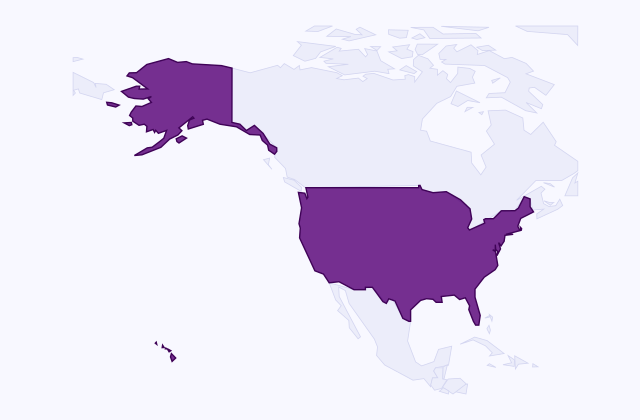
There is no national adoption code in the United States. Each state sets its own rules on who may adopt, how consent is taken and when it becomes irrevocable, and how long a birth parent has to revoke. Federal law intervenes at the edges: the Indian Child Welfare Act 1978 governs the placement of Native American children, the Adoption and Safe Families Act 1997 shapes foster-care timelines, the Intercountry Adoption Act 2000 implements the Hague Convention, and the Child Citizenship Act 2000 gives automatic citizenship to most children adopted abroad.
The three routes are so different that treating them as one subject is misleading. Foster care adoption costs nothing, concerns around 50,000 children a year, most of them school-age, and comes with ongoing subsidies. Private domestic adoption concerns newborns, costs as much as a car, and involves a real relationship with expectant parents who may change their minds. Intercountry adoption is now the smallest of the three.
Openness is the American norm. In private domestic adoption, most placements now involve some continuing contact between the birth family and the adoptive family, ranging from annual photographs to regular visits. Post-adoption contact agreements are enforceable in some states and merely moral in others — a distinction worth checking before making promises.
The Indian Child Welfare Act sets placement preferences for children who are members of, or eligible for membership in, a federally recognised tribe. It was upheld by the Supreme Court in Haaland v. Brackeen in 2023. Any adoption involving a child with tribal heritage requires specialist advice from the outset.
Same-sex couples: joint adoption is available in every state following Obergefell v. Hodges (2015), and Pavan v. Smith (2017) requires both spouses to be named on a birth certificate. Fulton v. Philadelphia (2021) nonetheless allows some faith-based agencies to decline to place children with same-sex couples.
In practice
- Choose the route: a public child welfare agency for foster care, a licensed agency or an adoption attorney for private domestic, a Hague-accredited agency for intercountry.
- Complete the home study: interviews, references, background checks, fingerprinting, financial and medical review.
- For private domestic adoption, be matched with an expectant parent, often through an agency profile or a matching service.
- Take consent after the birth in accordance with state law, then observe the revocation period.
- Finalise before the state court, typically six months after placement, and obtain the amended birth certificate.
Cost and coverage
Adoption from foster care is essentially free and usually comes with an adoption assistance subsidy and Medicaid for the child. Private domestic adoption runs from $30,000 to $70,000 including agency fees, legal costs and permitted birth-mother expenses. Intercountry adoption costs $25,000 to $60,000. The federal adoption tax credit offsets a substantial part of qualified expenses, and many employers offer adoption benefits. There is no federal paid adoption leave; FMLA gives twelve unpaid weeks.
Recent changes
Intercountry adoption to the United States has fallen from around 23,000 a year in 2004 to roughly a thousand, following the closure or restriction of the largest sending countries and stricter accreditation of agencies.
Where to go
- State department of children and family services, for foster care adoption
- Licensed private agencies and adoption attorneys, ideally members of the Academy of Adoption and Assisted Reproduction Attorneys
- AdoptUSKids, the national photolisting of waiting children
- Child Welfare Information Gateway, for state-by-state statutes
- Hague-accredited agencies listed by the Department of State
Worth knowing
Facilitators who are paid to match birth mothers with adoptive parents are illegal in many states; check your state's law before paying anyone who is not a licensed agency or attorney.
Frequently asked questions
How much does adoption cost in the United States?
From nothing for foster care adoption, which also brings a subsidy, to $30,000-$70,000 for private domestic adoption and $25,000-$60,000 for intercountry adoption.
Can a birth mother change her mind?
It depends entirely on the state. Some states make consent irrevocable once signed after a short waiting period; others allow revocation for up to 30 days.
Does an internationally adopted child become a US citizen?
Under the Child Citizenship Act 2000, most children adopted abroad by US citizens acquire citizenship automatically on entry, but some who arrived before the Act did not — a gap that has led to deportations of adult adoptees.
What is the adoption tax credit?
A federal credit against qualified adoption expenses, adjusted annually, which offsets a large part of the cost of a private or intercountry adoption.
The general article: Adoption · Compare with another country
General sources
- USA.gov — official guide to government services
- Congress.gov — federal legislation