
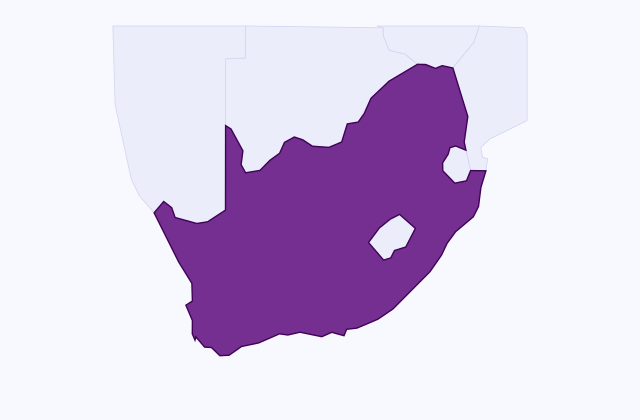
The legal framework
The Choice on Termination of Pregnancy Act 1996 permits termination on request up to and including the 12th week; from 13 to 20 weeks on medical, social or economic grounds assessed with a practitioner; and after 20 weeks where there is serious risk to the woman or severe fetal abnormality.
Key points
| On request | Up to 12 weeks |
|---|---|
| 13 to 20 weeks | Risk to physical or mental health, social or economic circumstances, rape or incest, or fetal abnormality |
| After 20 weeks | Serious risk to the woman, or severe fetal malformation |
| Minors | A girl under 18 may consent herself; counselling is advised but not required |
| Consent | No spousal or parental consent required |
| Providers | Designated public facilities and accredited NGOs; midwives and nurses may provide first-trimester care with training |
| CTOP Act | Choice on Termination of Pregnancy Act 1996, among the most permissive in Africa |
| No parental consent | A minor may consent herself, though counselling is encouraged |
| No spousal consent | Expressly not required |
| Designated facilities | Many designated facilities do not in fact provide the service |
In practice
- Go directly to a designated public facility or an accredited provider — no referral needed.
- Expect a dating assessment and counselling offer.
- Medication abortion is available early in pregnancy.
- Ask about contraception at the same visit.
- Call ahead to confirm the facility is actually providing terminations, not merely designated.
- If refused, ask to be referred: refusal without referral is a breach of the practitioner's duty.
Cost and coverage
Free in the public sector. Private and NGO providers charge fees, generally moderate.
Recent changes
The gap between the law and access is the recurring issue: only a portion of designated facilities actually provide services, and conscientious objection is widespread.
Where to go
- Designated public clinics and hospitals.
- Marie Stopes South Africa and accredited NGO providers.
- National Department of Health helplines for facility information.
Worth knowing
Illegal advertisements for cheap terminations are common in South African cities. They are dangerous and unlawful: use a designated facility or an accredited provider, where the service is free or affordable anyway. The gap between the law and provision is the central problem: designation on paper does not mean an available service, and unlawful providers advertise heavily.
Official sources and links
- gov.za — official government portal
- South African Human Rights Commission — constitutional rights body