
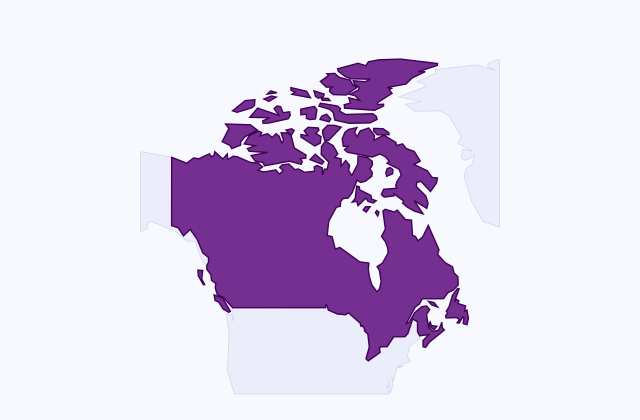
The legal framework
Canada legalised same-sex marriage nationally in 2005. Sexual orientation and gender identity are protected grounds under the federal human rights legislation and under every provincial code. Conversion therapy became a criminal offence in January 2022, covering not only the practice but its promotion, profiting from it and taking a person abroad for it. Blood donation moved to individual risk assessment in 2022.
Canada legalised same-sex marriage nationally in 2005 and criminalised conversion therapy in 2022 with one of the broadest bans anywhere: it covers providing it, promoting it, profiting from it and taking a person abroad for it, and it applies to adults as well as minors. Human rights codes in every province and territory, and federally, prohibit discrimination on grounds of sexual orientation and gender identity.
Key points
| Marriage | Legal nationally since 2005 |
|---|---|
| Conversion therapy | A criminal offence since January 2022, including promotion and profiting |
| Human rights codes | Sexual orientation and gender identity protected federally and in every province |
| Blood donation | Individual risk assessment since 2022 |
| Parenthood | Both parents recognised at birth in most provinces |
| Identity documents | Sex marker changes available without surgery; a third option exists federally |
| Refugee protection | Persecution on grounds of sexual orientation is a recognised ground |
In practice
- Human rights complaints are free to file and do not require a lawyer.
- The conversion therapy offence applies even where the person consented.
- Provincial rules on parental recognition differ: check before a move.
- Community organisations provide free legal information clinics in most cities.
Cost and coverage
Human rights complaints are free; legal aid exists subject to income.
Recent changes
The criminal ban on conversion therapy came into force in January 2022; provinces have continued to expand health coverage for gender-affirming care, with substantial variation between them.
Where to go
- Provincial and federal human rights commissions.
- Community legal clinics and LGBTQ organisations.
- National crisis lines for LGBTQ young people.
Worth knowing
The criminal ban reaches conduct outside Canada: taking a minor abroad for conversion therapy is itself an offence.
Frequently asked questions
How broad is the conversion therapy ban?
Unusually broad. The Criminal Code prohibits causing a person to undergo conversion therapy, doing so to a child, promoting or advertising it, profiting from it, and removing a child from Canada to undergo it abroad. Consent is not a defence, and the ban covers adults, not only minors.
Where do you bring a discrimination complaint?
To the human rights commission or tribunal of your province or territory for most matters, or to the Canadian Human Rights Commission for federally regulated sectors such as banking, telecommunications and interprovincial transport. The process is free and does not require a lawyer, though time limits apply.
Official sources and links
- Canada.ca — official government portal
- Justice Laws Website — federal statutes and regulations