
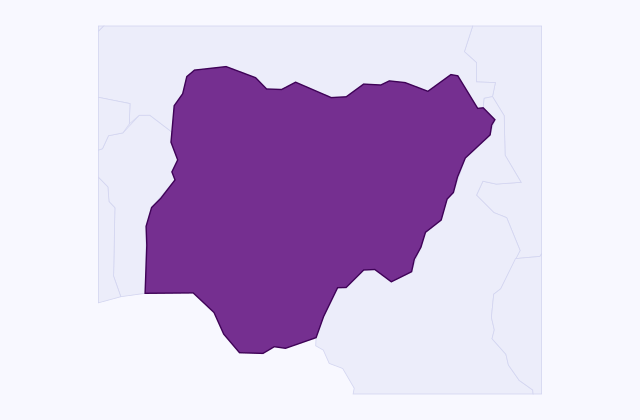
What the rules provide
Nigeria's Finance Act 2019, in force from February 2020, added locally manufactured sanitary towels and pads to the VAT-exempt list when the standard rate rose to 7.5 %; imported pads, which dominate the market, remain taxed and subject to customs duty. There is no national programme of free provision: state governments, first ladies' initiatives and NGOs run distributions in some schools, with no legal entitlement. No menstrual leave exists in the Labour Act.
Endometriosis is treated in the gynaecology departments of teaching hospitals and federal medical centres, with laparoscopy available in a limited number of centres, and in private clinics in Lagos and Abuja. Awareness campaigns by the Endometriosis Support Group Nigeria have improved recognition, but diagnosis is late and costs fall on patients; the national insurance schemes cover little gynaecological surgery.
Reusable pads are promoted by NGOs as the affordable option; nothing is reimbursed.
Key points
| VAT | Locally made pads exempt since February 2020; imported pads taxed |
|---|---|
| Free provision | No national scheme; state and NGO distributions |
| Menstrual leave | None |
| Endometriosis | Teaching hospitals and federal medical centres; private clinics; out of pocket |
| Reusable products | NGO programmes |
In practice
- Locally made brands are cheaper on the shelf partly because of the exemption; compare.
- Ask the school whether a state or NGO programme supplies pads.
- For pelvic pain, a teaching hospital gynaecology clinic is the reliable route; ask about laparoscopy availability.
What it costs
A cycle costs from several hundred to a few thousand naira in disposables, rising with inflation. Nothing is reimbursed; no national free provision.
What has changed recently
The Finance Act 2019 exemption has not been extended to imported products; several bills on free provision in schools have been introduced without passing.
Where to find help
- Federal Inland Revenue Service: VAT exemption list.
- State ministries of education and women's affairs: school distributions.
- Endometriosis Support Group Nigeria.
- Teaching hospitals and federal medical centres.
Worth knowing
With most pads imported and taxed, the exemption changes little for many buyers; the price gap between brands is the real lever, along with reusables.
Frequently asked questions
Are sanitary pads taxed in Nigeria?
Locally made pads are VAT-exempt since 2020; imported ones carry VAT and customs duty.
Are pads free in schools?
Not by law. Some states and NGOs distribute them in some schools.
Is there menstrual leave?
No.
Official sources and links
- Federal Inland Revenue Service — VAT exemption list
- Nigeria.gov.ng — official government portal