
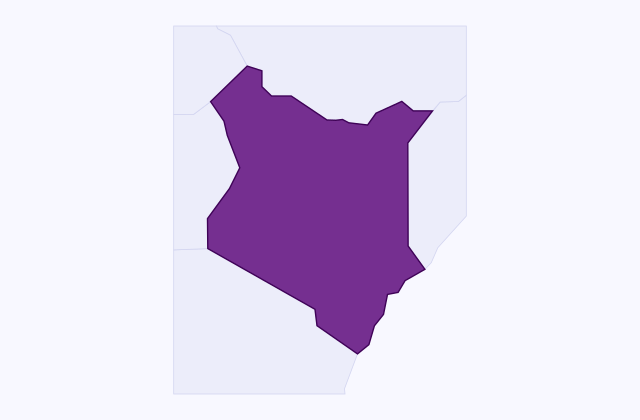
What the rules provide
Kenya exempted menstrual products from VAT in 2004 — the first country in the world to do so — removed the excise duty on imported products in 2011 and exempted raw materials for local manufacture in 2016. The Basic Education (Amendment) Act 2017 obliges the government to provide free, sufficient and quality sanitary towels to every girl registered in a public school who has reached puberty, with safe disposal; distribution began in 2018 through the National Sanitary Towel Programme, whose funding has fluctuated. A Menstrual Hygiene Management Policy covers 2019 to 2030.
There is no menstrual leave in the Employment Act; a bill has been discussed without passing. Absence is sick leave with a medical certificate.
Endometriosis is treated in the gynaecology departments of county and national referral hospitals and in private clinics in Nairobi and Mombasa; the Social Health Authority covers care in public and empanelled facilities. Awareness is low and diagnosis late; patient groups have grown in recent years.
Reusable pads and cups are exempt like disposables and are promoted by many school and NGO programmes.
Key points
| VAT | Exempt since 2004; import excise removed 2011; raw materials exempt 2016 |
|---|---|
| Schools | Basic Education (Amendment) Act 2017: free sanitary towels for girls in public schools; distribution since 2018 |
| Policy | Menstrual Hygiene Management Policy 2019–2030 |
| Menstrual leave | None |
| Endometriosis | County and referral hospitals; Social Health Authority in empanelled facilities |
In practice
- Ask the school head whether the government towels have arrived: supply depends on the annual budget.
- For pelvic pain, county hospital gynaecology clinics are the affordable route; ask for referral to a national hospital if needed.
- NGO programmes distribute reusable pads and cups in many counties.
What it costs
A cycle costs roughly 100 to 300 shillings in disposables, VAT-exempt. Free pads in public schools by law; nothing otherwise reimbursed.
What has changed recently
Funding for the school programme fell in the 2022–2023 budget and has been contested since; the legal obligation remains.
Where to find help
- Ministry of Education and State Department for Gender: National Sanitary Towel Programme.
- Ministry of Health: Menstrual Hygiene Management Policy.
- County hospital gynaecology clinics.
- Endometriosis Foundation of Kenya and patient groups.
Worth knowing
Exemption at the border and the factory does not always reach the shelf: prices in informal shops can exceed supermarket prices. Compare, and use school supplies where they exist.
Frequently asked questions
Is there VAT on pads in Kenya?
No, not since 2004 — Kenya was the first country to remove it.
Are pads free in schools?
By law, yes, for girls in public schools since the 2017 amendment; actual supply depends on the budget.
Is there menstrual leave in Kenya?
No. Sick leave with a certificate applies.
Official sources and links
- Kenya Law — Basic Education Act — free sanitary towels in public schools
- Ministry of Health — Menstrual Hygiene Management Policy — policy 2019–2030
- eCitizen — official government services portal