
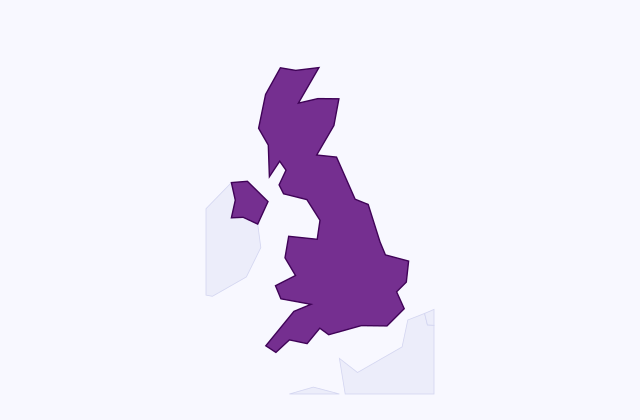
The legal framework
The United Kingdom has one of the most developed legal frameworks anywhere. The offence covers carrying out, assisting or arranging FGM, including abroad where the girl is a UK national or resident. Two features are distinctive: civil FGM Protection Orders, which a court can make urgently to stop a girl being taken abroad, and a mandatory reporting duty requiring health, social work and teaching professionals to report known cases in under-18s to the police.
Three tools work together in the UK: the criminal offence, the FGM Protection Order, which a court can make quickly to stop a girl being taken abroad and can include surrendering a passport, and the mandatory reporting duty, under which health, education and social-care professionals must report known cases in under-18s to the police. Convictions remain rare; the orders are used far more often, and that is the point — they prevent rather than punish.
Key points
| Statute | Female Genital Mutilation Act 2003; separate Act in Scotland |
|---|---|
| Maximum sentence | Fourteen years |
| Extraterritorial | Applies to acts abroad involving a UK national or resident |
| Protection Orders | Civil orders available urgently, including to seize passports |
| Mandatory reporting | Professionals must report known cases in under-18s to the police |
| NHS clinics | Specialist services including deinfibulation and reconstruction |
| Affected population | Estimated well over a hundred thousand women living in the UK |
In practice
- If you fear a girl may be taken abroad, apply for an FGM Protection Order: it can be made within days and can remove passports.
- Health professionals must report known cases in under-18s — that duty overrides confidentiality.
- NHS specialist clinics provide deinfibulation and psychological support free of charge.
- A medical letter recorded before travel is used as a protective measure.
Cost and coverage
NHS care, including deinfibulation, is free; Protection Order applications do not require a lawyer.
Where to go
- NSPCC FGM helpline, free and anonymous.
- NHS FGM specialist clinics.
- Family courts for FGM Protection Orders.
Worth knowing
Taking a girl abroad to be cut is an offence in the United Kingdom even where it is lawful at the destination. The law follows residence, not nationality alone.
Frequently asked questions
What is an FGM Protection Order?
A civil court order that protects a girl at risk. It can bar travel, require a passport to be handed in, and impose conditions on named adults. It can be applied for by the girl herself, a relative, a local authority or the police, and can be made urgently, sometimes within a day. Breaching it is a criminal offence.
Does the mandatory reporting duty apply to me?
It applies to regulated health and social-care professionals and teachers, and only to known cases in girls under eighteen — either a disclosure or something they observe. It is a duty to report to the police, not a matter of discretion. Other concerns, including risk to an unborn or younger child, go through normal safeguarding routes.
Official sources and links
- GOV.UK — official portal for public services and rights
- legislation.gov.uk — the statute book as enacted and revised