
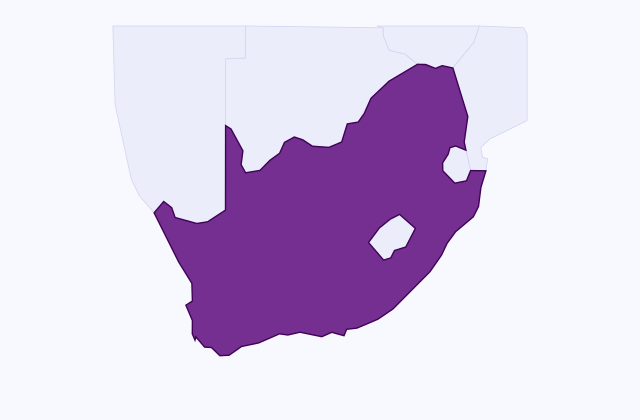
The legal framework
Female genital mutilation is not a traditional practice in South Africa. The Children's Act nonetheless prohibits it expressly, alongside virginity testing of children under sixteen and forced marriage, and provides for criminal penalties. The question arises mainly within migrant communities from countries where the practice exists.
The practice is not traditional in South Africa, but the Children's Act prohibits it expressly — a deliberate legislative choice rather than reliance on assault provisions. The Act also prohibits virginity testing of girls under sixteen and regulates male initiation, which places the rule within a broader framework on harmful practices rather than treating it as an isolated foreign issue.
Key points
| Children's Act | Expressly prohibits genital mutilation of a child |
|---|---|
| Related prohibitions | Virginity testing under sixteen and forced marriage are also prohibited |
| Prevalence | Not a traditional practice; concerns arise within migrant communities |
| Reporting | Mandatory reporting duties apply to a wide range of professionals |
| Care | Available through public health facilities |
| Asylum | Risk of FGM is recognised as a ground for refugee protection |
In practice
- Report any concern about a child to a social worker, the police or a designated child protection organisation.
- Public clinics can provide examination and referral.
- Refugee and migrant support organisations provide culturally appropriate assistance.
- Asylum claims based on FGM risk are recognised: legal aid organisations can assist.
Where to go
- Designated child protection organisations and social workers.
- Public health facilities.
- Refugee and migrant legal support organisations.
Worth knowing
The Children's Act names the practice explicitly, which makes it easier to act on than in countries relying only on general assault provisions.
Frequently asked questions
What does the Children's Act say?
It prohibits genital mutilation or circumcision of female children outright, and makes clear that no one may consent on the child's behalf. It sits alongside provisions on virginity testing and on male initiation, all framed as protection from harmful social and cultural practices.
Where do you report a concern?
To a social worker at the Department of Social Development, to the police, or to the Childline helpline. Teachers, nurses and doctors have reporting obligations under the Children's Act when they suspect abuse of a child.
Official sources and links
- gov.za — official government portal
- South African Human Rights Commission — constitutional rights body