
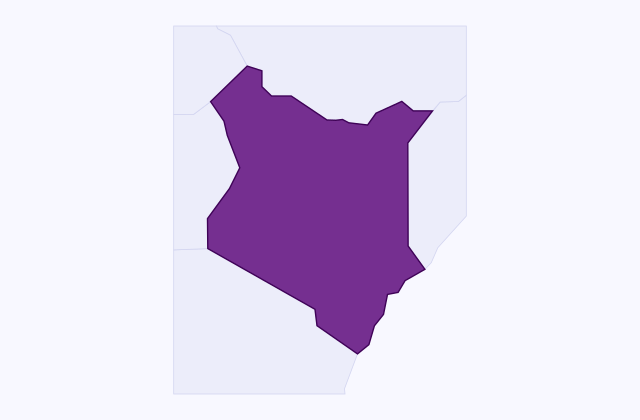
The legal framework
The Prohibition of Female Genital Mutilation Act 2011 is among the most comprehensive anywhere: it criminalises performing, procuring, aiding and failing to report FGM, prohibits stigmatising uncut women, and applies to acts committed abroad by Kenyan citizens or residents. A dedicated Anti-FGM Board coordinates enforcement, and the High Court upheld the ban against a constitutional challenge in 2021.
Kenya has one of the strongest legal frameworks on the continent: a dedicated 2011 Act, a national board with a statutory mandate, a specialised prosecution unit, and extraterritorial reach covering Kenyans who arrange the procedure abroad. Prevalence has fallen substantially over two decades. The persistent problem is cross-border cutting, where girls are taken into a neighbouring country for the procedure.
Key points
| Statute | Prohibition of Female Genital Mutilation Act 2011 |
|---|---|
| Failure to report | An offence in itself |
| Extraterritorial | Applies to acts abroad by citizens and residents |
| Anti-FGM Board | A dedicated national body coordinates enforcement and prevention |
| Case law | The High Court upheld the ban against a constitutional challenge in 2021 |
| Prevalence | Falling nationally, but very high in several counties |
| Medicalisation | A recognised problem, with health workers prosecuted |
In practice
- Report through the national helpline or to the Anti-FGM Board: reporting is itself a legal duty.
- Cross-border cutting into neighbouring countries is prosecuted: the Act follows residence.
- Rescue centres exist in the most affected counties for girls fleeing cutting.
- Tell the midwife at the first antenatal visit.
Cost and coverage
Reporting and care in public facilities are free.
Where to go
- Anti-FGM Board and national helpline.
- County children's officers and rescue centres.
- Public hospitals for treatment of complications.
Worth knowing
Failing to report a known case is itself an offence in Kenya. That provision is unusual and is what makes the law bite inside communities.
Frequently asked questions
What does the 2011 Act cover?
It criminalises performing, procuring, aiding and failing to report the practice, prohibits taking a person abroad for it, and rules out consent and cultural justification as defences. It also created the Anti-FGM Board, which coordinates prevention and works with county governments.
What is cross-border cutting?
The practice of taking a girl across a national border — into a neighbouring country where enforcement is weaker — so that the procedure happens outside Kenyan jurisdiction. The Act reaches Kenyans who do this, and cross-border coordination with neighbouring authorities has been strengthened.
Official sources and links
- eCitizen — official government services portal