
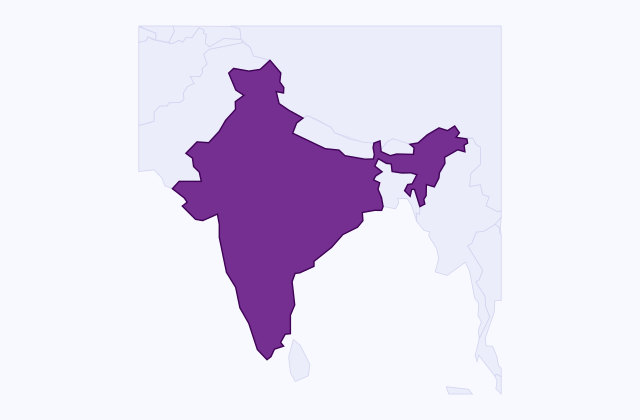
The legal framework
FGM in India is practised almost exclusively within the Dawoodi Bohra community, where it is known as khatna or khafz and typically performed on girls around the age of seven. There is no specific criminal provision; the acts would fall under general provisions on causing hurt and under child protection law. A petition asking the Supreme Court to declare the practice unconstitutional has been pending for years.
In India the practice is confined to one community, the Dawoodi Bohra, and is largely hidden. There is no specific prohibition; general provisions on hurt and the child-protection statute would in principle apply. A constitutional challenge has been pending before the Supreme Court for years, referred to a larger bench that has yet to decide, which leaves the legal position genuinely unsettled.
Key points
| Community | Practised almost exclusively within the Dawoodi Bohra community |
|---|---|
| Age | Typically around seven years old |
| Specific law | None; general hurt and child protection provisions would apply |
| POCSO | The child sexual offences law has been argued to cover the practice |
| Supreme Court | A constitutional challenge has been pending for several years |
| Survivor groups | Community-based organisations campaign for a ban and support survivors |
| Diaspora | Prosecutions have taken place in Australia and the United States |
In practice
- Survivor-led organisations provide confidential support and information.
- If a child is at immediate risk, childline services and child welfare committees can intervene.
- Medical care for complications is available in any gynaecology department.
- Families abroad should know that the practice is prosecuted in most countries of residence.
Where to go
- Childline services and district child welfare committees.
- Survivor-led organisations within the community.
- Gynaecology departments of public hospitals.
Worth knowing
The absence of a specific Indian law does not make the practice lawful, and it certainly does not protect families living abroad: convictions have been obtained in Australia and the United States.
Frequently asked questions
Is the practice illegal in India?
There is no law naming it. General offences causing hurt and the child-protection statute could apply, but they have not been used for this purpose in practice. A constitutional challenge remains undecided before a larger bench of the Supreme Court.
Where can someone turn for support?
To survivor-led organisations within the community that campaign on the issue and provide peer support, and to child helplines for a child at immediate risk. Medical care for complications is available through the general health system, though few clinicians have specific training.
Official sources and links
- India.gov.in — national portal of India
- India Code — central and state legislation