
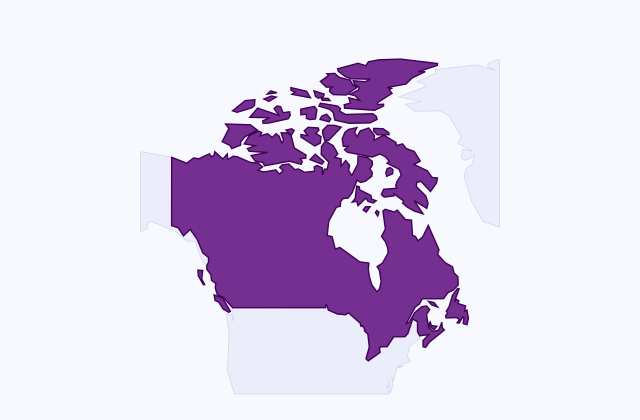
The legal framework
FGM has been treated as aggravated assault under the Criminal Code since 1997. The provision states that consent is not a defence, other than for medically necessary procedures, and it is separately an offence to remove from Canada a child ordinarily resident here for the purpose of FGM. Provincial child protection law imposes a duty to report any child whose safety is at risk.
Canada dealt with the question in 1997 by amending the aggravated-assault provision of the Criminal Code to name the practice expressly, and by making it an offence to remove a child from Canada for that purpose. The consent of a parent is no defence, and neither is the consent of a girl under eighteen. Prosecutions have been very rare; the practical work happens in child-protection and in health care.
Key points
| Criminal Code | Aggravated assault provisions, amended in 1997 to cover FGM expressly |
|---|---|
| Consent | Not a defence except for medically necessary procedures |
| Removal abroad | A separate offence to take a child out of Canada for the purpose |
| Reporting | Duty to report under provincial child protection law |
| Immigration | Practising FGM can make a person inadmissible |
| Care | Provided through the public health system; specialist services in larger cities |
| Asylum | Risk of FGM is an accepted ground for protection |
In practice
- Anyone who suspects a child is at risk must report to child protection — the duty overrides professional confidentiality.
- Community health centres in the main cities provide culturally adapted care.
- Ask for a female clinician and an interpreter if that makes the consultation possible.
- A documented medical examination before travel is used as a protective measure.
Cost and coverage
Care is covered by provincial health insurance.
Where to go
- Provincial child protection services.
- Community health centres serving newcomer communities.
- Settlement organisations and women's health clinics.
Worth knowing
The offence of taking a child out of Canada for FGM allows intervention before departure. That is the provision to invoke where travel is planned.
Frequently asked questions
Can parents consent on a child's behalf in Canada?
No. The Criminal Code makes clear that consent is not a defence where the person is under eighteen, and a parent cannot give it for them. The only exception is a surgical procedure performed for genuine medical benefit.
What happens if a family plans a trip abroad?
Removing a child from Canada for the purpose is itself an offence. If you have concrete concerns, contact child protection in your province — they can seek an order preventing travel. Raise it before the trip; afterwards there is far less that anyone can do.
Official sources and links
- Canada.ca — official government portal
- Justice Laws Website — federal statutes and regulations