
The legal framework
Framework Decision 2004/757/JHA lays down minimum rules on the constituent elements of drug trafficking offences and penalties, extended by Directive (EU) 2017/2103, which brought new psychoactive substances into the definition of a drug. Regulation (EU) 2017/2101 created an early warning and risk assessment system, now run by the European Union Drugs Agency (EUDA), which replaced the EMCDDA in July 2024.
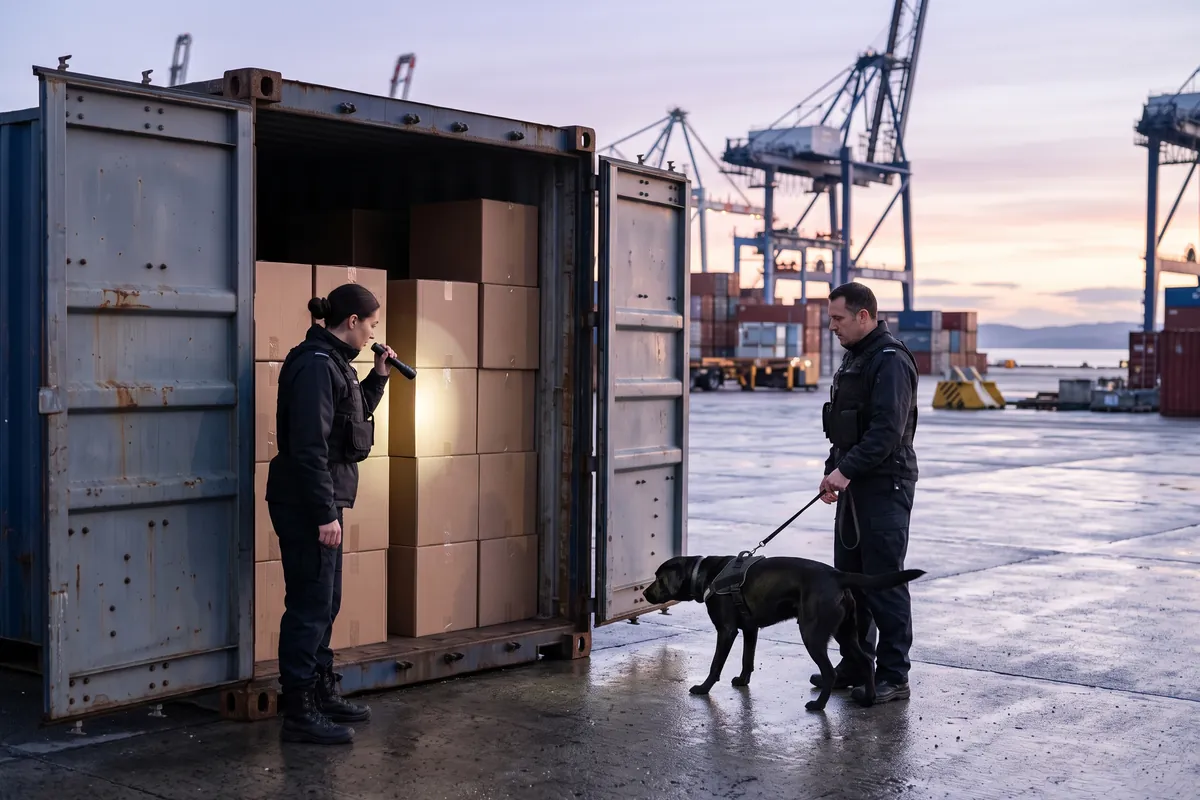
The Union has not harmonised personal use: each state decides whether and how to punish it. The same quantity of cannabis therefore brings a fine in one country, a health referral in another and a prison sentence in a third.
What is harmonised concerns the top of the chain: production, manufacture, offering, transport, import and export, with maximum penalties of at least one to three years for ordinary cases and at least five to ten years for serious offences, particularly within a criminal organisation.
The European early warning system is what allows a new molecule circulating on the continent to be identified and brought under control. It is through that mechanism that synthetic cannabinoids are being scheduled, molecule by molecule.
Key points
| Main instrument | Framework Decision 2004/757/JHA, amended by Directive (EU) 2017/2103 |
|---|---|
| Agency | EUDA, the European Union Drugs Agency, since July 2024 |
| Personal use | Outside the scope of harmonisation: a matter for member states |
| New substances | Within the definition of a drug and covered by the early warning system |
In practice
- Never assume your own country's rule applies next door: that is precisely what the Union has not harmonised.
- Crossing a border with a product, even a small quantity for personal use, turns possession into importation under several national laws.
- Cannabis bought legally in one country stays illegal in the neighbouring one and on the flight there.
Cost and coverage
No cost of its own: fines and court costs are a matter of national law.
Recent changes
The EUDA replaced the EMCDDA on 2 July 2024 with a broader mandate, including a network of forensic laboratories and monitoring of polydrug use.
Where to go
- EUDA (European Union Drugs Agency), annual reports and alerts.
- The European early warning system on new psychoactive substances.
- Reitox national focal points, one per member state.
Worth knowing
Membership of the Union creates no right to carry a product from one state to another. Free movement of people and goods does not apply to controlled drugs.
Frequently asked questions
Does the European Union require personal use to be punished?
No. It sets minimum rules on trafficking. Personal use remains entirely a matter for each state, which is why the differences are so large.
Is cannabis that is legal in one country legal across the Union?
No, and carrying it from one country to another is unlawful importation in the country of arrival.
Who decides that a new molecule becomes a controlled drug?
The process starts with the early warning system and risk assessment by the EUDA, after which the substance can be added to the European definition of a drug and transposed by member states.
Official sources and links
- UN Human Rights Office — ratified treaties and country reviews
- ILO NATLEX — national legislation database