
The legal framework
Public clinics and non-governmental organisations provide contraception, testing and counselling, and adolescent-friendly services — separate hours, trained staff — have been developed in many districts. Access for an unmarried teenager remains socially difficult, and clinicians vary in how they handle parental involvement. Early pregnancy and its effect on schooling are the dominant public health concern.
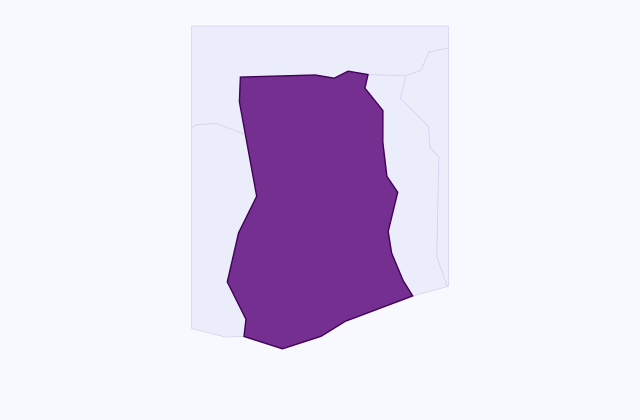
Ghana's approach is to set up adolescent health corners within existing clinics rather than separate youth services, backed by the National Health Insurance Scheme, which covers registered members including young people. Contraceptives are free or cheap at public facilities and widely sold in pharmacies. The recurring finding in evaluations is that young people avoid public clinics because of how they expect to be treated, not because of cost.
Key points
| Where to start | Adolescent-friendly clinic or non-governmental service |
|---|---|
| Contraception | Available, often subsidised |
| Emergency contraception | From pharmacies, availability varies outside towns |
| Testing | Free under public programmes |
| Early pregnancy | Major concern, with a strong effect on staying in school |
| Child marriage | A separate and far more serious issue where it persists |
| Confidentiality | Ask explicitly; practice varies by clinician |
In practice
- Youth-focused clinics are the least judgemental entry point where they exist.
- Emergency contraception is available from pharmacies — ask early rather than late.
- Free testing under public programmes is worth using.
- Staying in school is the single best-documented protective factor.
Cost and coverage
Public consultations cost little; contraception is often subsidised.
Where to go
- Nearest public health clinic.
- Adolescent-friendly or youth services.
- Non-governmental sexual and reproductive health organisations.
- National child helpline.
Worth knowing
Distinguish two very different situations: a consensual relationship between teenagers of similar age, and a union with an adult. The second is a child protection matter, not a family conversation.
Frequently asked questions
Does health insurance cover a young person in Ghana?
Yes, if registered with the National Health Insurance Scheme; registration is free for those under eighteen. It covers consultations and many services, though not every contraceptive method. Family planning services are in any case provided free or at low cost at public facilities.
What is an adolescent health corner?
A designated space within a health facility, with staff trained to see young people, intended to make services less intimidating than a general outpatient queue. Coverage is uneven; ask at the district health directorate which facilities have one.
Official sources and links
- Ghana.gov — official government portal