
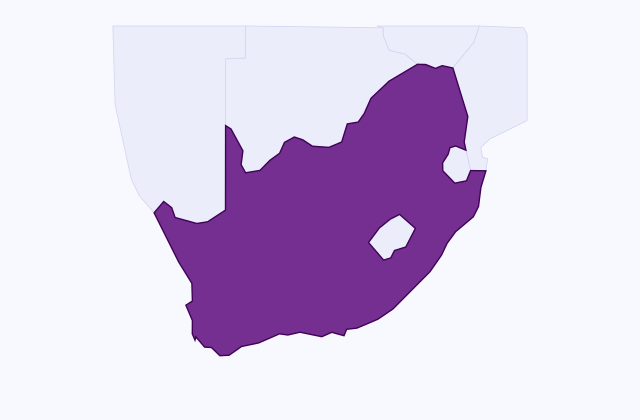
The legal framework
The Cybercrimes Act 2020 created offences of unlawful access, unlawful acquisition of data and cyber fraud. The Southern African Fraud Prevention Service offers free Protective Registration, which flags your identity so that credit providers apply additional verification. Credit bureaus must provide a free annual credit report.
South Africa's Cybercrimes Act made the theft of incorporeal property — including data and identity information — an offence, closing an old gap. The most useful practical tool is free: protective registration with the South African Fraud Prevention Service places a flag on your identity number so that credit providers must take extra steps before granting credit in your name.
Key points
| Statute | Cybercrimes Act 2020, plus common law fraud |
|---|---|
| Protective registration | Free with the Southern African Fraud Prevention Service |
| Credit reports | One free report a year from each registered bureau |
| Regulator | National Credit Regulator for disputes with credit providers |
| Data breach | Notify the Information Regulator under POPIA |
| Documents | Report a lost ID to Home Affairs and to SAPS |
| SAFPS | Protective registration is free and flags future applications |
| Bureau dispute | Must be investigated within a statutory period |
| Home Affairs | Report a lost identity document to prevent misuse |
In practice
- Register free with SAFPS for protective registration.
- Obtain your free credit reports and dispute every unknown account with the bureau, which must investigate.
- Open a case with SAPS and keep the case number.
- Report a lost or stolen identity document to Home Affairs.
- Dispute every unrecognised entry in writing: the bureau must investigate within the statutory period.
Where to go
- Southern African Fraud Prevention Service.
- National Credit Regulator.
- Information Regulator.
Worth knowing
A bureau must investigate a disputed entry within a set period and remove it if it cannot be substantiated: dispute in writing, not by phone. Protective registration with SAFPS is free and is the single most effective preventive step available in South Africa.
Frequently asked questions
What is protective registration?
A free flag placed on your identity number with the South African Fraud Prevention Service, which requires member credit providers to verify more carefully before opening an account in your name. It slows down your own applications slightly and is worth it if your details have been exposed.
What should you do in the first hour?
Call your bank and freeze the affected accounts and cards, change the passwords on your email first and then on everything linked to it, and turn on two-factor authentication. Take screenshots of everything before anything is deleted. Then report to the police and keep the reference number: banks, lenders and telecom operators will ask for it before they reverse anything.
Official sources and links
- gov.za — official government portal
- South African Human Rights Commission — constitutional rights body