
The legal framework
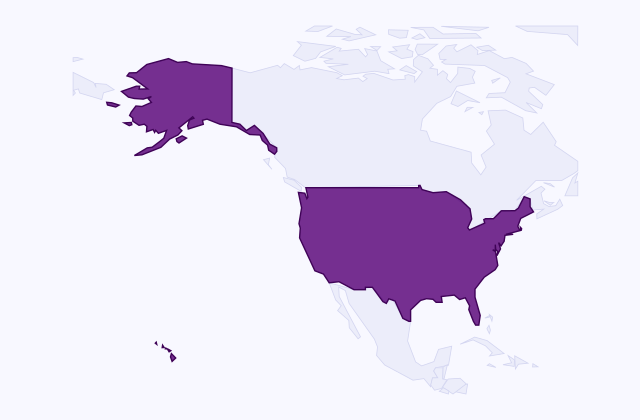
Marital property law is state law. Nine community property states divide marital property equally; the rest apply equitable distribution. On death, most states protect the surviving spouse through an elective share, typically a third of the estate. Louisiana is the only state with forced heirship, limited to children under 24 or with disabilities.
Key points
| Community property states | Arizona, California, Idaho, Louisiana, Nevada, New Mexico, Texas, Washington, Wisconsin |
|---|---|
| Equitable distribution | All other states: fair rather than necessarily equal |
| Prenuptial agreements | Enforceable subject to disclosure, voluntariness and, in some states, fairness |
| Elective share | Protects a surviving spouse against disinheritance in most states |
| Children | No forced heirship outside Louisiana: children can generally be disinherited |
| Probate | State process; living trusts are widely used to avoid it |
| Federal estate tax | Applies only above a very high exemption; several states levy their own estate or inheritance tax |
| Two systems | Nine community property states; the rest apply equitable distribution |
| Beneficiary designations | Retirement accounts and life insurance pass outside the will |
| Probate avoidance | Living trusts are widely used to avoid a slow probate process |
In practice
- Check whether your state is community property — it changes everything about ownership during marriage.
- Use beneficiary designations and, where appropriate, a revocable living trust to avoid probate.
- Keep inherited property separate and un-commingled if you want it to remain separate property.
- Review documents after any move: moving between community property and equitable distribution states has real consequences.
- Update beneficiary designations after any marriage, divorce or death — they override the will.
- Consider a revocable trust if you own property in more than one state.
Cost and coverage
Estate planning packages cost a few hundred to a few thousand dollars; probate can cost far more.
Recent changes
State estate and inheritance taxes have been repealed in many states but persist in others, so residence at death matters significantly.
Where to go
- State bar referral services and certified estate planning specialists.
- County probate court self-help resources.
- State treasurer or comptroller for unclaimed property searches.
Worth knowing
Beneficiary designations beat wills. A retirement account or life insurance policy still naming a former spouse will pay out to them, whatever the will says. Owning real estate in a second state usually means a second probate. A trust or a transfer-on-death deed avoids it.
Official sources and links
- USA.gov — official guide to government services
- Congress.gov — federal legislation