
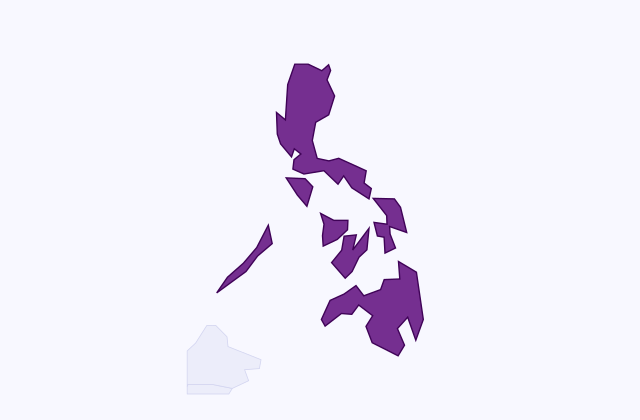
The legal framework
The Family Code sets the age of marriage at 18, with parental consent required below 21 and parental advice below 25. Religious solemnising officers registered with the civil registrar can perform marriages with full legal effect. Since 2021, the Prohibition of Child Marriage Act has criminalised marriage involving anyone under 18.
Key points
| Age | 18; parental consent required from 18 to 20, parental advice from 21 to 24 |
|---|---|
| Polygamy | Prohibited under the Family Code; permitted for Muslims under the Code of Muslim Personal Laws, under conditions. |
| Child marriage | Prohibited and criminalised since 2021, including facilitating or solemnising it |
| Licence | Marriage licence from the local civil registrar, with a 10-day posting period |
| Religious ceremonies | Legally effective if the officiant is registered |
| Same-sex marriage | Not recognised |
| Muslim Filipinos | Code of Muslim Personal Laws applies, with different rules |
| No divorce | Marriage can only be ended by death, nullity or annulment |
| Licence validity | 120 days, valid anywhere in the country |
| Cohabitation exception | No licence needed after five years of cohabitation without impediment |
| Family planning seminar | A certificate is required before the licence is issued |
| Minimum age 18 | Child marriage was prohibited outright in 2021 |
In practice
- Attend the family planning and responsible parenthood seminar required for the licence.
- Allow for the 10-day posting period before the licence is issued.
- Register the marriage with the Philippine Statistics Authority and obtain the PSA certificate.
- Foreign nationals need a certificate of legal capacity from their embassy.
- Complete the seminar early: the certificate is a precondition for the licence.
- Verify the solemnising officer's registration with the civil registrar general.
Cost and coverage
Licence and registration fees are low; church and venue fees are the main expense.
Recent changes
The 2021 child marriage law was a major reform, covering not only legal marriages but also informal and customary unions involving minors.
Where to go
- Local civil registrar for licences.
- Philippine Statistics Authority for certificates.
- Commission on Human Rights and NGOs on child marriage.
Worth knowing
Because the Philippines has no divorce, the decision to marry carries consequences that are extremely difficult to undo. Legal capacity documentation for foreign spouses should be checked carefully for the same reason. With no divorce available for most Filipinos, a defective marriage is very hard to undo. Verifying the officer's authority beforehand is worth the effort.
Official sources and links
- gov.ph — official government portal