
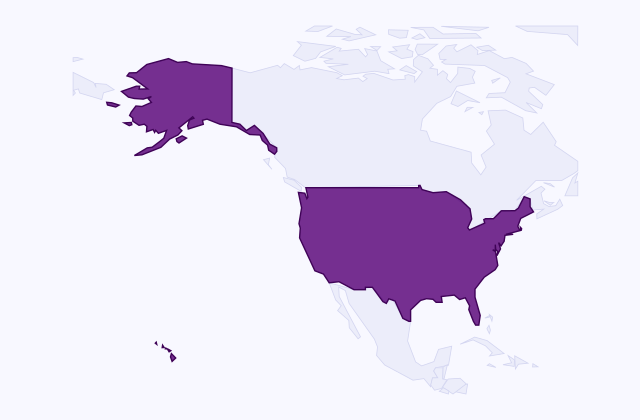
The legal framework
Name change is a state matter. Adults normally file a petition in the county court, which may require publication in a newspaper and a criminal background check, before an order is granted. Marriage and divorce provide simpler routes, using the certificate or decree. Some states allow gender marker changes by self-attestation; others require medical evidence.
Key points
| Court petition | Filed in county court; publication required in many states |
|---|---|
| Marriage | Certificate is sufficient to adopt a spouse's surname |
| Divorce | The decree can restore a former name |
| Children | Both parents must usually consent or be served with notice |
| Safety exception | Confidential name changes are available for survivors of abuse in many states |
| Gender markers | Rules vary sharply by state and have changed frequently |
| Federal documents | Social Security, passport and immigration records updated separately |
| Publication | Many states require notice in a newspaper, with exemptions for safety |
| Gender marker | Procedures vary sharply by state and have changed recently in several |
In practice
- Get several certified copies of the deed, order or certificate — every institution wants its own.
- Update in a sensible order: passport or national ID first, then bank, employer, licences, insurers and qualifications.
- Keep the old and new documents together permanently: proof of the link between the two names is sometimes needed years later.
- Tell credit reference agencies, or a name change can look like an identity mismatch.
- Ask for a publication waiver if you are at risk; most states provide one.
- Update Social Security first, then the driver's licence and passport, in that order.
Cost and coverage
Filing fees of roughly one to five hundred dollars, plus publication costs; fee waivers are available for low-income applicants.
Recent changes
Requirements for changing gender markers on federal and state documents have shifted repeatedly; check the current position rather than relying on older guidance.
Where to go
- County court self-help centres, which provide forms and instructions.
- Social Security Administration and State Department for federal records.
- Legal aid and LGBTQ legal organisations for assistance.
Worth knowing
If publication would expose you to danger, ask the court for a waiver: most states allow sealed or confidential name changes for survivors of domestic violence and stalking. The order in which you update records matters: agencies verify against each other, and starting in the wrong place causes repeated rejections.
Official sources and links
- USA.gov — official guide to government services
- Congress.gov — federal legislation