
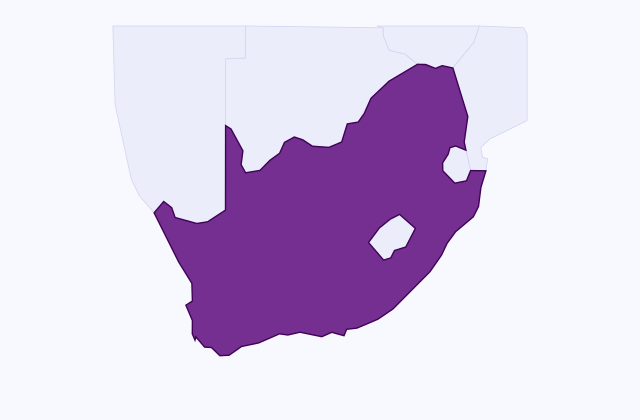
The legal framework
The Constitution of 1996 was the first in the world to prohibit discrimination on grounds of sexual orientation, and the Civil Union Act of 2006 opened marriage. Equality courts provide an accessible route for discrimination claims. The gap is in enforcement rather than in law: violence, including sexual violence targeting lesbian women, remains high, and hate crimes legislation was enacted only recently.
South Africa's 1996 Constitution was the first in the world to prohibit discrimination on grounds of sexual orientation, and the Civil Union Act followed in 2006 after the Constitutional Court required it. The law is among the strongest anywhere. The gap between law and life is the country's defining feature here: violence, including so-called corrective rape in townships, remains a serious problem, and prosecution rates are poor.
Key points
| Constitution | Prohibits discrimination on grounds of sexual orientation since 1996 |
|---|---|
| Marriage | Open since 2006 under the Civil Union Act |
| Equality courts | Accessible route for discrimination claims, without a lawyer |
| Hate crimes | Dedicated legislation enacted recently |
| Adoption | Open to same-sex couples |
| Gender markers | Amendable under the Alteration of Sex Description Act |
| Violence | Remains high, particularly outside major urban centres |
In practice
- Equality courts sit in magistrates' courts and take claims without a lawyer or a fee.
- Report hate-motivated violence explicitly as such: it affects how the case is handled.
- Organisations provide shelter, counselling and case support in most provinces.
- Marriage officers may still object on religious grounds in some circumstances: call ahead.
Cost and coverage
Equality court claims are free and do not require a lawyer.
Recent changes
The hate crimes legislation was signed into law, creating specific offences covering sexual orientation and gender identity, and the conscientious objection clause for marriage officers was removed in 2020.
Where to go
- Equality courts, in every magistrates' court district.
- South African Human Rights Commission.
- Community organisations providing shelter and case support.
Worth knowing
The distance between constitutional protection and daily safety is the defining feature here. The legal remedies are genuinely accessible; the risk of violence is nonetheless real and geographically uneven.
Frequently asked questions
Can any official refuse to marry a same-sex couple?
Not since 2020. The Civil Union Act had allowed individual marriage officers to object on conscience grounds; an amendment removed that, and Home Affairs must ensure every office can solemnise. If you are turned away, ask for the office manager and record the refusal.
What protection exists against hate crime?
The Prevention and Combating of Hate Crimes and Hate Speech Act creates specific offences with sexual orientation and gender identity as listed grounds, giving prosecutors a designated charge rather than relying on ordinary assault. Reporting remains the weak point; support organisations can accompany you to a police station.
Official sources and links
- gov.za — official government portal
- South African Human Rights Commission — constitutional rights body