
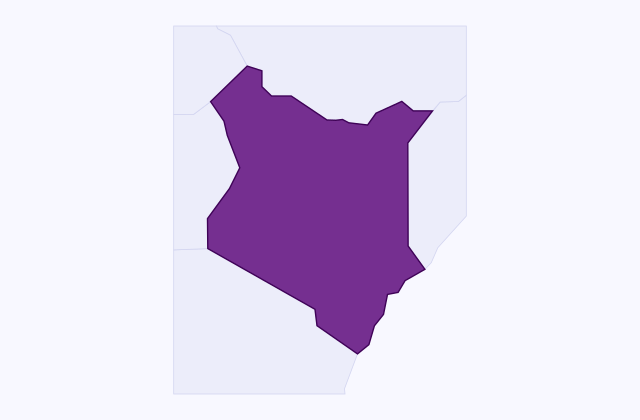
The legal framework
The penal code continues to criminalise so-called carnal knowledge against the order of nature, with a maximum of fourteen years, and a 2019 High Court ruling declined to strike the provisions down. In 2023 the Supreme Court held that organisations may not be denied registration on grounds of sexual orientation, confirming freedom of association. Prosecutions of consenting adults are uncommon, but arrests, extortion and eviction are not.
Kenya retains colonial-era provisions criminalising carnal knowledge against the order of nature, upheld by the High Court in 2019 in a decision under appeal. In 2023 the Supreme Court held that the refusal to register an LGBTQ organisation was unconstitutional, confirming a right to associate — a significant ruling that provoked a political backlash and attempts to legislate against it.
Key points
| Criminal law | Up to fourteen years under the penal code; the right to register an organisation was confirmed in 2023 |
|---|---|
| Discrimination | No legal protection on grounds of sexual orientation |
| Marriage and unions | Not available |
| Organisations | Operate under legal and financial pressure, often through health programmes |
| Extortion | Common, usually arranged through dating applications |
| Health care | Testing and treatment remain accessible without disclosure |
| Travellers | The law applies to visitors and foreign residents |
In practice
- Do not keep messages, images or application profiles that could expose you.
- Treat meetings arranged online with strangers as high risk.
- Health and testing programmes continue and do not require any declaration.
- If arrested, ask for a lawyer and do not sign a statement you have not read.
Cost and coverage
Health services remain accessible at low cost; legal defence is expensive, though organisations sometimes fund it.
Where to go
- Non-governmental health and testing programmes.
- Human rights organisations, including regional ones.
- Lawyers experienced in these prosecutions.
Worth knowing
Extortion and eviction are far more frequent than prosecution. Both usually start from a phone or a landlord, which is where practical precautions matter most.
Frequently asked questions
What did the Supreme Court decide in 2023?
That the refusal by the NGO Co-ordination Board to register an organisation because of its name and purpose breached the constitutional right to freedom of association. The court distinguished the right to organise from the criminal provisions, which it did not rule on. The decision stands despite calls for it to be reviewed.
What practical precautions make sense?
Assume that anything written down can be read: dating profiles, messages, photographs, cloud backups. Meet new people in public, tell someone where you are going, and be cautious with anyone who moves quickly to demands for photographs or money — blackmail using images is the most common harm reported. Know which organisation you would contact before you need it, and keep the number somewhere other than your phone.
Official sources and links
- eCitizen — official government services portal