
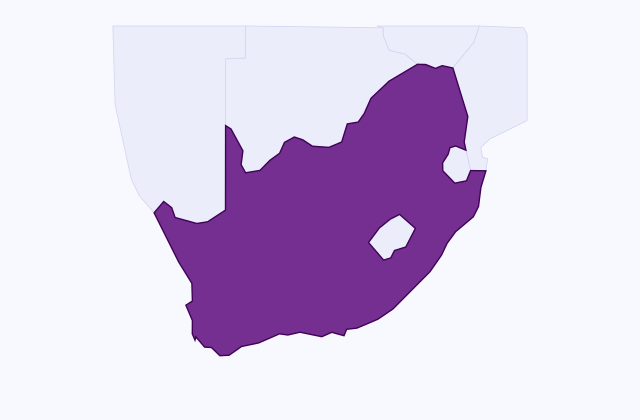
The legal framework
Antenatal care and delivery are free in public facilities for all pregnant women, including non-nationals. Maternity leave is four consecutive months, unpaid by the employer but partly replaced by the Unemployment Insurance Fund at a sliding rate. The private sector has one of the highest caesarean rates in the world, far above any clinical justification.
Antenatal care and delivery are free in the public sector for South Africans, and the maternal health programme is built around midwife-run obstetric units with referral to hospitals. Leave is four consecutive months, unpaid by the employer but partly compensated by the Unemployment Insurance Fund at a sliding rate — a system that works when the claim goes smoothly and leaves families exposed when it does not.
Key points
| Cost | Free antenatal care and delivery in the public sector |
|---|---|
| Maternity leave | Four consecutive months, with UIF paying a percentage of earnings |
| Parental leave | Ten days for the other parent, with a court having found the framework unconstitutional |
| Antenatal visits | Eight contacts recommended; first visit encouraged before twenty weeks |
| HIV | Testing and treatment integrated into antenatal care, with very high coverage |
| Private sector | Caesarean rates among the highest in the world |
| Road to Health | Booklet used for the child's follow-up from birth |
In practice
- Book antenatal care before twenty weeks: late booking is the main modifiable risk here.
- Claim UIF maternity benefits as soon as your leave starts; claims are time-limited.
- Ask for the clinical reason for any proposed caesarean, especially in private care.
- Keep the Road to Health booklet: it is the child's health record for years.
Cost and coverage
Public antenatal care and delivery are free; UIF replaces part of earnings during leave.
Recent changes
Parental leave provisions have been the subject of a constitutional challenge over the unequal treatment of mothers and other parents, with the courts directing Parliament to revise the framework.
Where to go
- Public clinics and community health centres.
- Department of Labour offices for UIF maternity benefits.
- District hospitals for delivery and complications.
Worth knowing
Maternity care in public facilities is free for everyone, including women without documents. Being turned away on that basis is unlawful.
Frequently asked questions
Is maternity leave paid in South Africa?
Not by the employer, unless the contract says so. You are entitled to four consecutive months of leave, and you claim maternity benefits from the Unemployment Insurance Fund at between thirty-eight and sixty per cent of earnings depending on income. Claim early: processing delays are common.
What does public maternity care cover?
Free antenatal visits, delivery and postnatal care in public facilities, with midwife obstetric units handling uncomplicated births and referral to a hospital where needed. Bring your clinic card to every visit; continuity of records is the weak point of the system.
Official sources and links
- gov.za — official government portal
- South African Human Rights Commission — constitutional rights body