
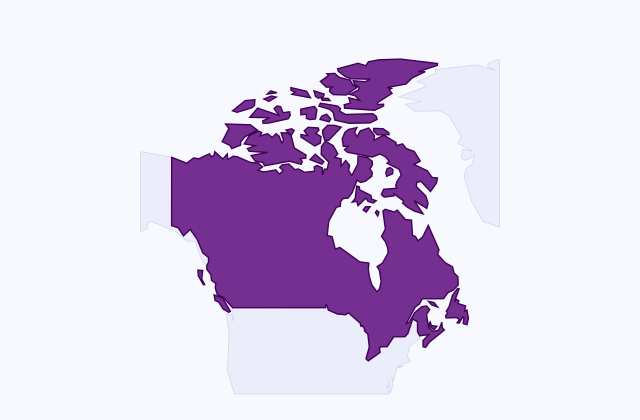
The legal framework
Maternity and parental benefits come through Employment Insurance, except in Quebec, which runs its own more generous plan. Parents choose between a standard option paying more over twelve months and an extended option paying less over eighteen. Birth itself is covered by provincial health insurance. Midwifery is regulated and publicly funded in most provinces, with home birth available.
Canada offers a choice that is unusual: fifteen weeks of maternity benefit followed by parental benefit taken either as thirty-five weeks at the standard rate or sixty-one weeks at a lower one — up to eighteen months in total, with the same money spread thinner. Midwifery is regulated and publicly funded in most provinces, and a home birth with a registered midwife is a normal option rather than a fringe one.
Key points
| Benefits | Employment Insurance maternity and parental benefits; Quebec has its own plan |
|---|---|
| Standard option | Higher rate, up to twelve months in total |
| Extended option | Lower rate, up to eighteen months in total |
| Parental sharing | Additional weeks available when both parents take leave |
| Midwifery | Regulated and publicly funded in most provinces |
| Place of birth | Hospital, birth centre or home, depending on province and risk |
| Cost | Birth covered by provincial health insurance |
In practice
- Choose between the standard and extended options carefully: the decision is irreversible once benefits start.
- Register with a midwifery practice early — caseloads fill quickly in most cities.
- The extra weeks available when both parents take leave are lost if one parent takes everything.
- Check provincial coverage if you move mid-pregnancy: waiting periods can apply.
Cost and coverage
Birth is covered by provincial insurance; benefits replace a percentage of earnings up to a ceiling.
Recent changes
Parental benefits include additional weeks when both parents take leave, an incentive to share; provinces have continued to expand funded midwifery, though waiting lists remain the practical limit.
Where to go
- Service Canada for Employment Insurance benefits.
- Provincial midwifery associations and birth centres.
- Public health units for prenatal classes and postpartum visits.
Worth knowing
The choice between the standard and extended benefit options cannot be changed once the first payment is made. Work out the total amount, not the monthly figure, before deciding.
Frequently asked questions
Standard or extended parental benefits — which is better?
Extended gives you longer at home but the total amount of money is roughly the same, spread over more months at a lower weekly rate. If your employer tops up, the top-up usually applies only during the standard period, which often decides the question. Model both before you choose; you cannot switch afterwards.
Can you have a midwife-attended birth in Canada?
In most provinces yes, with registered midwives publicly funded and able to attend births at home, in a birth centre or in hospital. Availability is the constraint — demand exceeds supply in many cities, so register as soon as you know you are pregnant.
Official sources and links
- Canada.ca — official government portal
- Justice Laws Website — federal statutes and regulations