
The legal framework
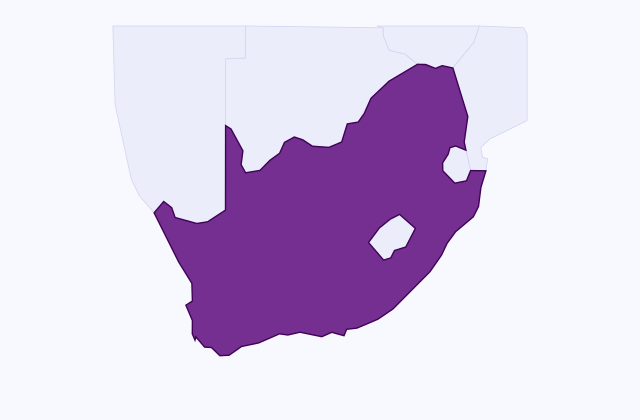
Contraception is free at public clinics, including implants, injectables, IUDs and condoms, with adolescents able to consent from the age of 12. The Children's Act allows a child of 12 or older to obtain contraception without parental consent, provided they have been properly advised. Access barriers are practical rather than legal: distance, stock-outs, provider attitudes and, for young people, fear of being recognised.
Key points
| Cost | Free or subsidised in public facilities |
|---|---|
| Methods | Condoms, pills, injectables, implants, IUDs and sterilisation |
| Emergency contraception | Available in pharmacies and public facilities |
| Spousal consent | Not legally required, though often requested in practice |
| Adolescents | Entitled to services; national policies increasingly explicit about this |
| Community distribution | Community health workers supply condoms and pills locally |
| Free at public facilities | Including injectables, implants and intrauterine devices |
| Implants | Rolled out nationally, with training gaps affecting removal |
In practice
- Ask about long-acting methods — implants and IUDs are the most effective and often the cheapest over time.
- Check contraindications: smoking over 35, migraine with aura and a history of clots rule out combined methods.
- Keep emergency contraception at home; the sooner it is taken, the better it works.
- Only condoms also protect against sexually transmitted infections.
- Ask specifically about removal when choosing an implant: removal capacity is the recognised weak point.
- Youth-friendly services exist at many clinics and reduce the risk of judgemental treatment.
Cost and coverage
Free or low cost in the public sector; NGO clinics charge modest fees.
Recent changes
Regional partnerships have driven a measurable increase in the use of modern methods, with long-acting implants accounting for much of the growth.
Where to go
- Public health centres and district hospitals.
- National family planning association affiliated to IPPF.
- Community health workers and mobile outreach services.
Worth knowing
If a provider insists on a husband's or parent's consent, that is a local practice rather than a legal rule in almost all of these countries. Asking for the facility in charge, or going to an NGO clinic, usually resolves it. The law allows a 12-year-old to consent to contraception in her own right. Facilities that demand a parent are acting outside the Children's Act.
Official sources and links
- gov.za — official government portal
- South African Human Rights Commission — constitutional rights body