
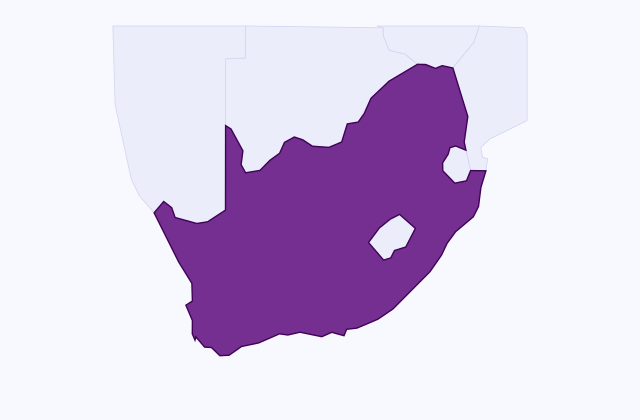
The legal framework
Children's legislation allows a child of twelve or older to obtain contraceptives and to consent to an HIV test on their own, and to consent to medical treatment where they are mature enough. Public clinics provide contraception and testing free of charge. The age of consent to sex is sixteen, with close-in-age provisions.
South Africa has the clearest statutory framework of any country covered here. The Children's Act allows a child of twelve or older to obtain contraceptives without parental consent, provided they are given proper advice, and to consent to medical treatment if they are mature enough to understand. The National Health Act adds a right to confidentiality. The gap is between the law, which is excellent, and clinic practice, where judgemental treatment deters young people.
Key points
| Parental involvement | Practice varies; ask the service directly before the appointment |
|---|---|
| Contraception | Available; cost and confidentiality differ by setting |
| Emergency contraception | The earlier it is taken the better it works |
| Testing | Available through public services, often free |
| Youth services | Where they exist, they are the easiest entry point |
| Age of consent | See the consent page for this country |
| Biggest obstacle | Fear of judgement, more often than the rule itself |
In practice
- Call the service first and ask plainly what they do about confidentiality — answers differ.
- Emergency contraception works best taken early: do not wait for an appointment to get it.
- No internal examination is needed to start contraception.
- As a parent, your first reaction decides whether your daughter seeks care or hides.
Cost and coverage
Public services are free or low cost in most of these systems.
Where to go
- Public clinic, free contraception and testing
- School health programme
- Pharmacy, for emergency contraception
- Childline South Africa, free and confidential
Worth knowing
What determines whether a teenager gets care is rarely the statute. It is whether she believes the adult in front of her will keep it to themselves — and whether she thinks you will react badly.
Frequently asked questions
From what age can a young person get contraception in South Africa?
Twelve. The Children's Act permits it without parental consent provided the young person receives proper medical advice, and the same Act allows consent to medical treatment from twelve where the child has sufficient maturity. Testing and counselling follow the same rule.
Is the consultation confidential?
Yes, the National Health Act protects it. In practice the difficulty is attitudes rather than law: young people report being questioned or lectured at clinics. Youth-friendly services and non-governmental clinics are often the more comfortable route.
Official sources and links
- gov.za — official government portal
- South African Human Rights Commission — constitutional rights body