
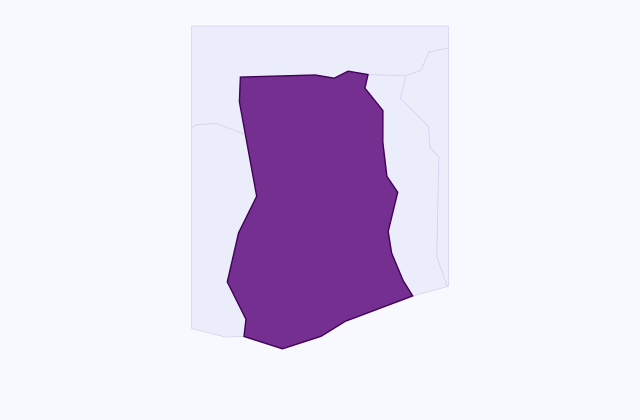
The legal framework
Article 18(2) of the Constitution protects privacy of home, property, correspondence and communication. The Data Protection Act 2012 created the Data Protection Commission and requires data controllers to register. Enforcement resources have been limited, but registration requirements are actively pursued.
Ghana's 1992 Constitution protects privacy of home, property, correspondence and communication, and the Data Protection Act of 2012 created a Data Protection Commission with a registration regime for data controllers and rights of access and correction. Enforcement capacity is limited, and most practical remedies come from the Cybersecurity Act, which criminalises non-consensual sharing of intimate images and cyberstalking.
Key points
| Constitution | Article 18(2): home, property, correspondence and communication |
|---|---|
| Statute | Data Protection Act 2012, one of the earliest in West Africa |
| Regulator | Data Protection Commission |
| Registration | Data controllers must register and renew |
| Individual rights | Access, correction, prevention of processing causing damage or distress |
| Court | High Court enforcement of fundamental human rights under Article 33 |
| CHRAJ | Handles complaints against public bodies free of charge |
| Court route | Article 33 enforcement in the High Court |
In practice
- Send a written access request first: it forces the other side to disclose what it holds and creates a paper trail.
- Screenshot everything, with the date and the URL visible, before asking for removal.
- Complain to the regulator — it is free — and keep the reference number.
- Court action is the last step, and the limitation periods are short: take advice early.
- Check the register: unregistered processing is a straightforward breach to plead.
Where to go
- Data Protection Commission.
- Commission on Human Rights and Administrative Justice.
- Legal Aid Commission.
Worth knowing
CHRAJ handles complaints against public bodies free of charge and is often the quicker route where the intrusion comes from an official source. CHRAJ is free and has offices nationwide, which makes it the practical first step against any public body.
Frequently asked questions
What rights does the Data Protection Act give?
Access to the personal data an organisation holds about you, correction of inaccurate data, and the right to object to processing, with complaint to the Data Protection Commission. Organisations processing personal data are required to register with the Commission, which is the main compliance lever.
What can you do if a former partner shares private material?
Save the evidence first — screenshots with the address, the date and the account name — then report it to the platform, which is the fastest route to removal. Send a written demand to stop and to delete. Where the material is intimate, check whether a specific criminal offence applies, and whether a protection order is available: in several jurisdictions a court can prohibit further publication within days, which is quicker than any damages claim.
Official sources and links
- Ghana.gov — official government portal