
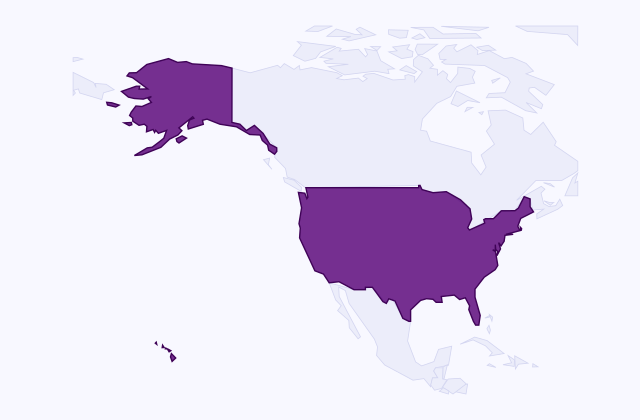
The legal framework
Two distinct doctrines apply. The right of publicity, a state-law right, protects the commercial value of your name and likeness. The privacy torts of intrusion and public disclosure cover unwanted exposure. For intimate images, nearly every state now has a criminal statute, and the federal TAKE IT DOWN Act of 2025 criminalised the publication of non-consensual intimate imagery, including AI-generated imagery, and imposed a 48-hour removal duty on covered platforms.
Key points
| Right of publicity | State law; strong in California, New York and Tennessee |
|---|---|
| Public photography | Generally protected by the First Amendment |
| State NCII laws | Criminal statutes in nearly every state |
| Federal law | TAKE IT DOWN Act 2025: criminal offence plus a 48-hour platform removal duty |
| Deepfakes | Expressly covered by the federal statute and by several state laws |
| Minors | Federal and state child protection statutes apply, with severe penalties |
| 48-hour removal | Covered platforms must remove reported non-consensual intimate imagery within 48 hours |
In practice
- Save the evidence before reporting: screenshots with the URL and date, the account name, and any messages.
- Use the platform's own reporting form first — it is the fastest route to removal — then report to the authority.
- Use StopNCII.org or Take It Down for intimate images: they create a digital fingerprint so participating platforms can block re-uploads without you sending the image anywhere.
- Do not pay a person demanding money to delete an image: payment almost always leads to further demands.
- Use the statutory notice route to platforms: the 48-hour deadline is enforceable.
Recent changes
The TAKE IT DOWN Act, enacted in 2025, is the first federal statute directly addressing non-consensual intimate imagery and AI-generated sexual deepfakes.
Where to go
- Cyber Civil Rights Initiative helpline.
- Take It Down, operated by NCMEC, for people under 18.
- Local police and the FBI's IC3 portal.
Worth knowing
The First Amendment protects a great deal of unwanted photography, especially of public figures and in public places. The strong remedies are concentrated on intimate imagery and commercial exploitation. The federal statute applies to AI-generated imagery of real people as well as authentic images. That closed the largest gap in state law.
Official sources and links
- USA.gov — official guide to government services
- Congress.gov — federal legislation