
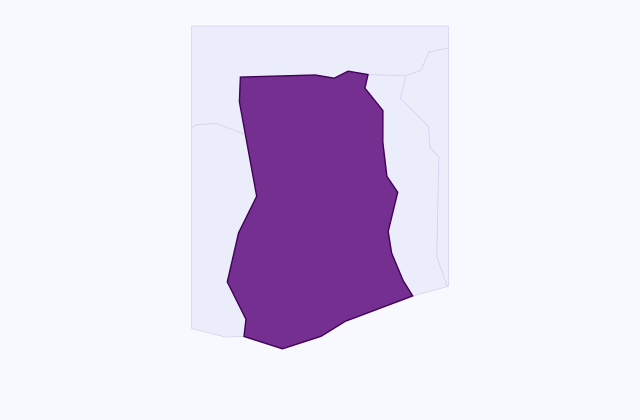
The legal framework
The Cybersecurity Act 2020 criminalises the non-consensual sharing of intimate images and gives the Cyber Security Authority a reporting and response role, with a dedicated short code. The Data Protection Act 2012 applies to identifiable images, and the Constitution protects the privacy of correspondence and communication.
Key points
| Statute | Cybersecurity Act 2020, section 66 |
|---|---|
| Reporting | Cyber Security Authority, with a dedicated short code and online channels |
| Data protection | Data Protection Act 2012 |
| Constitution | Article 18(2) |
| Related offences | Extortion and threats under the criminal code |
| Children | Aggravated offences where the person depicted is a child |
| Section 66 | Non-consensual sharing of intimate images is a specific offence |
| Short code | The Cyber Security Authority operates a dedicated reporting line |
In practice
- Save the evidence before reporting: screenshots with the URL and date, the account name, and any messages.
- Use the platform's own reporting form first — it is the fastest route to removal — then report to the authority.
- Use StopNCII.org or Take It Down for intimate images: they create a digital fingerprint so participating platforms can block re-uploads without you sending the image anywhere.
- Do not pay a person demanding money to delete an image: payment almost always leads to further demands.
- Report through the Cyber Security Authority as well as to the police.
Where to go
- Cyber Security Authority reporting channels.
- Ghana Police Service Cybercrime Unit.
- Commission on Human Rights and Administrative Justice.
Worth knowing
Where the image is being used to demand money, that is extortion as well as an image offence: say so in the report, because it changes which unit handles the case. Ghana's Cybersecurity Act contains an express offence, which many victims and some officers are unaware of. Cite the section when reporting.
Official sources and links
- Ghana.gov — official government portal