
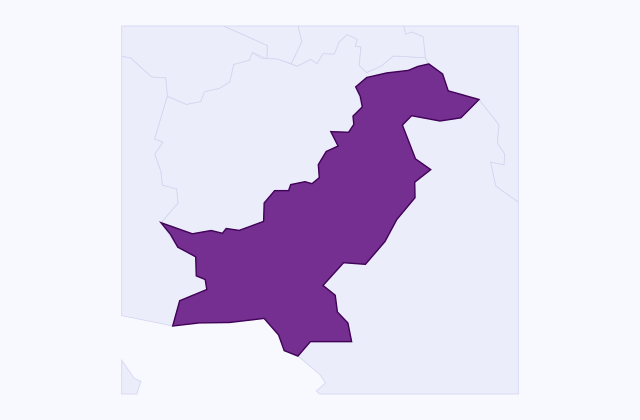
The legal framework
Pakistan does not recognise any form of same-sex union. Colonial-era provisions criminalising same-sex conduct remain in the Penal Code, and Hudood provisions apply to Muslims. Prosecutions for consensual adult conduct are uncommon, but the social and family risks are substantial. The Transgender Persons Act of 2018 was narrowed by the Federal Shariat Court in 2023.
Pakistan combines an inherited criminal provision that is rarely enforced with a social environment in which the family, not the state, is the principal source of danger. For a binational couple the consequence is that formal legal analysis matters less than practical precautions, and that nothing about the relationship should appear in any document filed with an authority.
Key points
| Marriage | Not recognised |
|---|---|
| Criminal law | Colonial-era provisions remain; Hudood provisions apply to Muslims |
| Union alternative | None |
| Foreign marriage | No effect in Pakistan |
| Adoption | Filiation-creating adoption is not recognised; guardianship is the route |
| Transgender law | 2018 Act narrowed by the Federal Shariat Court in 2023 |
| Discrimination | No protection |
In practice
- No union can be registered, and a foreign marriage produces no effect on the territory.
- Blackmail using private images is the most frequently reported harm; treat digital traces as the main risk.
- Protections must be organised in the country of residence — will, power of attorney, nominations.
- Consular assistance is available to foreign nationals but does not prevent arrest or prosecution.
Cost and coverage
There is no union to register. Legal costs arise only in the event of proceedings.
Recent changes
The Federal Shariat Court's 2023 ruling struck down key provisions of the Transgender Persons Act, including self-identification, and subsequent appeals have left the framework unsettled.
Where to go
- Consulate of your country of nationality.
- Regional and international human rights organisations.
- Local lawyer, as soon as any proceedings begin.
Worth knowing
The risk is less judicial than familial: coercion, forced marriage and violence within the family are the dangers most often documented, and police protection is unreliable.
Frequently asked questions
Is a foreign marriage of any use?
Not in Pakistan: it has no legal existence, gives no spousal visa, no inheritance rights over property there and no standing in a hospital. It retains its effects in the country that celebrated it, which is where any protective documents should be drawn up.
What are the practical risks?
Blackmail using images or messages, family coercion, and violence — far more often than prosecution. Anyone in this situation should think hard about who holds information about them, and about what is stored on a phone that could be examined.
Official sources and links
- Government of Pakistan — official government portal