
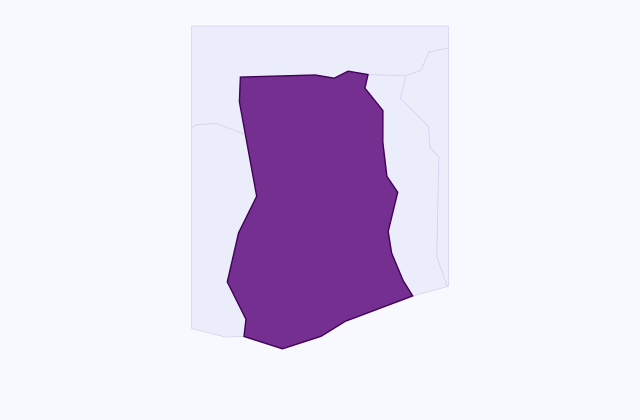
The legal framework
Same-sex conduct is already an offence in Ghana as unnatural carnal knowledge, a misdemeanour. Beyond that sits a much wider bill: passed by Parliament in February 2024, it lapsed when Parliament was dissolved before the 2024 election, was reintroduced as a private member's bill in March 2025 and passed again on 29 May 2026. It provides for imprisonment for identifying as LGBTQ and longer sentences for promotion or support. As of mid-2026 it awaited presidential action.
Ghana illustrates how a bill can dominate a country's international image for years without becoming law. The 2024 text lapsed with the parliamentary term, the 2025 reintroduction restarted the process from the beginning, and the May 2026 passage put the question back on the President's desk. Throughout, the operative law has remained the older misdemeanour provision.
Key points
| Marriage | Not available |
|---|---|
| Criminal law | Unnatural carnal knowledge, a misdemeanour |
| Wider bill | Passed by Parliament on 29 May 2026; presidential assent pending |
| Scope of the bill | Identifying as LGBTQ, and promotion or support of it |
| Union alternative | None |
| Foreign marriage | Not recognised |
| Discrimination | No protection |
In practice
- No union of any kind can be registered in the country.
- A marriage celebrated abroad has no effect here: no spousal visa, no inheritance, no say in hospital.
- The documents that protect a couple — will, power of attorney, nominations — must be made in the country of residence.
- Digital caution is a safety measure: messages, photographs and dating applications.
Cost and coverage
There is no union to register. Legal assistance is the only foreseeable cost.
Recent changes
Parliament passed the Human Sexual Rights and Family Values Bill again on 29 May 2026 after the earlier text lapsed with the 2024 dissolution; the President said in June 2026 that it would first be examined by the attorney general.
Where to go
- Consulate of your country of nationality, for consular protection.
- Regional and international human rights organisations.
- Local lawyer, as soon as any proceedings begin.
Worth knowing
The bill is not law until assented to and gazetted: check the current position before relying on any description of Ghanaian law, including this one.
Frequently asked questions
Is the wider bill in force?
Not at the time of writing. Parliament passed it on 29 May 2026 and the President indicated in June 2026 that it would be examined by his legal advisers before any further step. Until it is assented to and gazetted, the existing misdemeanour provision is the applicable law.
What would change if it were signed?
It would criminalise identifying as LGBTQ, with up to three years, and the promotion, sponsorship or support of such activities, with up to ten — extending liability well beyond conduct to speech, funding and association.
Official sources and links
- Ghana.gov — official government portal