
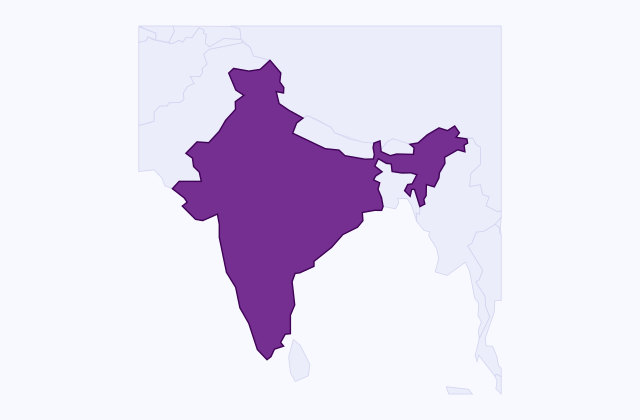
The regime that applies
An e-visa is available to most nationalities through the official government portal: application online, photograph, payment, approval usually within seventy-two hours, and presentation of the approval on arrival at designated airports. Paper visas remain available at consulates for longer stays and for categories the e-visa does not cover.
Use the official portal only. India's e-visa attracts more imitation sites than almost any other, charging several times the real fee for a form you can complete yourself. Passport validity of six months beyond arrival and two blank pages are required.
If your partner or you have Indian origin
A person of Indian origin, or the foreign spouse of an Indian citizen or of an OCI holder, may be eligible for an Overseas Citizen of India card. It grants lifelong multiple-entry rights and removes the visa question permanently, which changes the practical shape of a transnational relationship entirely. For a foreign spouse it requires the marriage to have subsisted for a set period. It is worth investigating early: the process is slow but the benefit is durable.
Health
No vaccination is compulsory from Europe, but yellow fever proof is required from certain countries. Hepatitis A, typhoid and routine boosters are advised, and malaria prophylaxis depends on the region and the season. Food and water precautions matter more than any vaccine: bottled or treated water, hot food, and caution with ice.
Restricted areas
Several regions — parts of the north-east, Ladakh's border areas, the Andaman and Nicobar islands — require an additional inner line or protected area permit, obtained separately. Check before planning a route through them.
Three rules that hold for every destination
- Use the official portal. Sites that "facilitate", "expedite" or "check" a visa charge for a service the state does not require, and collect your identity documents on the way. The official site is always cheaper and usually faster.
- A visa is not a right of entry. It is permission to present yourself at the border; the officer there decides. Carry the return ticket, the address of your stay and evidence of funds.
- Read your own foreign ministry's travel advice before booking, not after. It conditions your insurance and your consulate's ability to help.
The passport comes first
The commonest reason for being refused boarding is not the visa but the passport: insufficient validity beyond the return date, no free pages, a damaged document. Check it the day you decide to travel, not the week you leave — a renewal takes weeks.