Argentina is home to the best-known community of British descent in Latin America. British merchants settled in Buenos Aires from the early nineteenth century, and British capital built and ran much of the railway network until it was nationalised in 1948. English and Scottish families ran estancias (cattle and sheep ranches) from the pampas to Patagonia, founded churches, clubs and bilingual schools — St Andrew's Scots School dates from 1838 — and brought football, rugby and polo.
Irish emigrants, many from Westmeath, Longford and Wexford, became shepherds and sheep farmers in Buenos Aires province. In 1865 about 150 Welsh settlers landed from the Mimosa at Puerto Madryn and founded the Chubut colony — Rawson, then Gaiman and Trelew, and later Trevelin in the Andes — where Welsh is still spoken and taught.
The 1982 war over the Falkland Islands (Islas Malvinas) interrupted diplomatic relations until 1990. Today British and Irish expatriates, Anglo-Argentines holding British or Irish passports and many British-Argentine couples live above all in Greater Buenos Aires; estimates of the number of Argentines of British, Irish or Welsh descent vary too widely to be quoted. That is why Argentina has its page in the English version of this site.
The country in brief
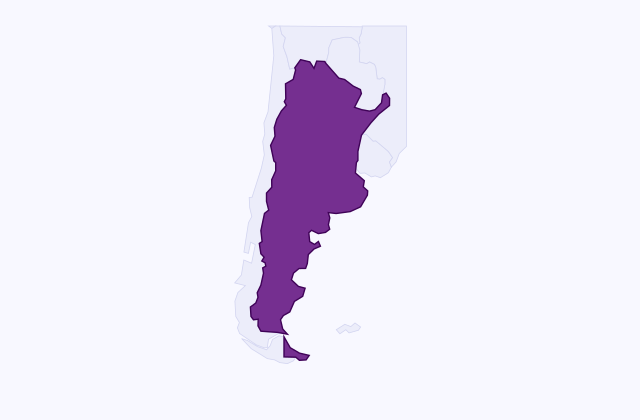
Argentina. Simplified location map — Natural Earth data, public domain.
Argentina, 46 million inhabitants, is a federal republic of twenty-three provinces and the City of Buenos Aires with a single civil law: the Código Civil y Comercial (Civil and Commercial Code) of 2015 governs marriage, the unión convivencial (cohabiting union), divorce without grounds, matrimonial property, inheritance and parentage throughout the country. A comprehensive law against violence towards women since 2009, equal marriage since 2010, the first in Latin America, a change of legal sex by simple declaration since 2012, assisted reproduction for any adult since 2013, abortion on request up to the fourteenth week since 2021: its family law is one of the most advanced on the continent, with contraception and abortion free in the public health system, though access now varies more from province to province.
The pages below set out, topic by topic, what Argentine law provides, how things are done and where to go — and what matters for a British or Irish resident or couple: the apostille and the traductor público (sworn public translator), recognition of an Argentine divorce under the Family Law Act 1986, a legítima (reserved share) that an English will cannot override for land in Argentina, adoption only after five years' residence, the Hague Convention on child abduction, a zero drink-driving limit on national roads, and the British Embassy — or the Embassy of Ireland — in Buenos Aires.
Official or institutional documents this page relies on, consulted on 12 October 2026. Links open in a new tab.
Page checked in .
Text prepared with artificial intelligence, reviewed and checked by the AffectionPlus team (method and sources: About). This content does not replace medical or legal advice. Spotted an error? Write to us.