
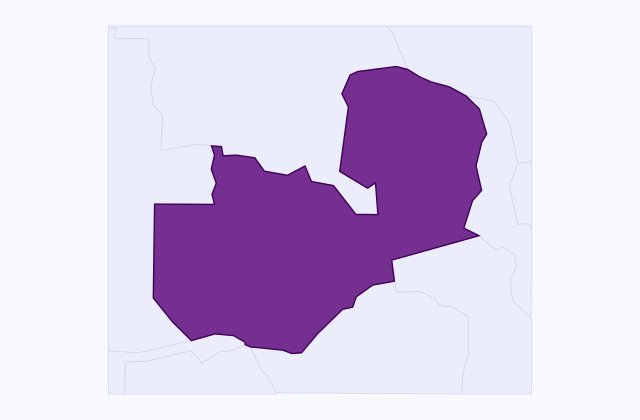
The legal framework
The matter is governed by the Narcotic Drugs and Psychotropic Substances Act 2021. The 2021 Act consolidated the law and created the Drug Enforcement Commission's current powers. Zambia has also licensed the cultivation and export of cannabis for medicinal and industrial purposes since 2019, while recreational use remains prohibited.
The distinction between personal possession and trafficking turns largely on quantity, assessed at the point of arrest, and on any evidence of sale.
Treatment is provided mainly through the national psychiatric hospital and a small number of specialised units; capacity is well below need.
Tramadol and other diverted medicines circulate widely outside pharmacy channels and account for a growing share of dependence.
Key points
| Main statute | The Narcotic Drugs and Psychotropic Substances Act 2021 |
|---|---|
| Personal possession | Fine or imprisonment depending on the statute and the quantity |
| Trafficking | Long terms of imprisonment; life in several jurisdictions |
| Treatment | National psychiatric hospital and a small number of specialised units |
In practice
- Public psychiatric services are the practical route to treatment and are low cost or free.
- A foreign national arrested should contact their embassy immediately; pre-trial detention is common.
- Never carry a package or a bag for another person across a border.
Cost and coverage
Public treatment is low cost or free where it exists; private residential care is expensive and unevenly regulated.
Recent changes
Regional bodies have tightened controls on the distribution of tramadol, the main diverted medicine across West and East Africa.
Where to go
- Drug Enforcement Commission rehabilitation services, and Chainama Hills Hospital, Lusaka
- Hospital psychiatry departments in the main cities.
- National drug control agency.
- Emergency services.
Worth knowing
Quantity assessed at the point of arrest usually decides whether the charge is possession or trafficking, and the difference in sentence is very large.
Frequently asked questions
Where can someone get treatment?
Primarily through the national psychiatric hospital and the specialised units listed above.
Is personal possession always imprisoned?
It depends on the statute and the quantity; several of these countries now allow a fine for personal possession.
Official sources and links
- UN Human Rights Office — ratified treaties and country reviews
- ILO NATLEX — national legislation database