
The legal framework
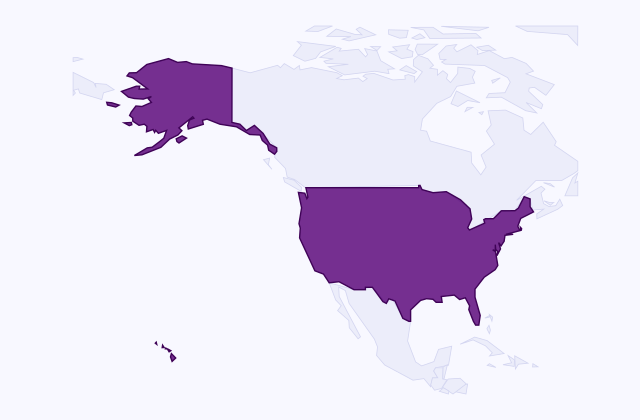
Federal law makes it an offence for a United States citizen or lawful permanent resident to travel abroad and engage in illicit sexual conduct with a minor, or to travel with that intent. Dual criminality is not required. Registered sex offenders must notify intended international travel, and passports issued to certain offenders carry an endorsement.
The PROTECT Act allows prosecution of United States citizens and lawful permanent residents who travel abroad and engage in illicit sexual conduct with a minor, with no requirement that the conduct be criminal where it occurred, and it also criminalises arranging such travel for commercial purposes. International Megan's Law added passport identifiers and advance notification to destination countries for certain registered offenders.
Key points
| Basis | Federal law on illicit sexual conduct in foreign places |
|---|---|
| Who is covered | US citizens and lawful permanent residents |
| Penalty | Up to thirty years' imprisonment |
| Dual criminality | Not required |
| Travel notification | Required from registered offenders before international travel |
| Passport endorsement | Applied to certain convicted offenders |
| Reporting | Homeland security investigations tip line and the national centre's cybertipline |
In practice
- Report through the federal tip line; it accepts reports about conduct abroad.
- Intent alone can be an offence: travelling for that purpose is prosecutable even if nothing occurred.
- A witness abroad can report without being a victim and without a full identification.
- Convictions have followed reports made by hotel staff and fellow travellers.
Cost and coverage
Reporting is free everywhere listed here.
Where to go
- Homeland Security Investigations tip line.
- National Center for Missing & Exploited Children — CyberTipline.
- Nearest US embassy or consulate.
- FBI, for related offences.
Worth knowing
The removal of dual criminality is the whole point of these provisions: an act tolerated where it happened can still be prosecuted at home. There is no jurisdiction that operates as a refuge.
Frequently asked questions
What does the PROTECT Act cover?
Travel by a citizen or lawful permanent resident with intent to engage in illicit sexual conduct with a minor, and the conduct itself when it occurs abroad, with substantial penalties. It also reaches those who arrange or facilitate such travel for commercial purposes.
Who can report a suspicion from abroad?
Anyone. Hotel and tour staff, other travellers, non-governmental organisations and consular officials all pass reports to police in the traveller's home country, usually through Interpol channels. You do not need proof, only a specific and honest account: a description, a date, a place and a name or room number. Reporting to the local police as well is worth doing where it is safe to do so.
Official sources and links
- NCMEC CyberTipline — national reporting line, accepts reports about conduct abroad
- Homeland Security Investigations tip line — federal tip line
- USA.gov — official guide to government services
- Congress.gov — federal legislation