
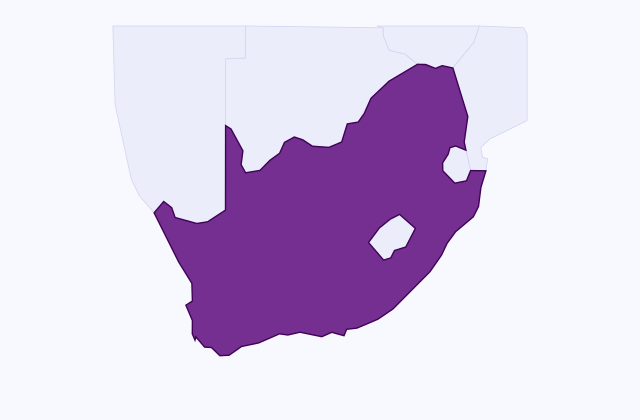
The legal framework
The framework rests on the constitutional protection of expression, which excludes incitement and advocacy of hatred, together with the Films and Publications Amendment Act on non-consensual intimate images and the Cybercrimes Act 2020. The Protection from Harassment Act provides accessible protection orders, including against anonymous harassers, with courts able to compel service providers to identify them.
Key points
| Defamation | Civil in all of these jurisdictions; criminal defamation retained in some |
|---|---|
| Cyberharassment | Criminalised by cybercrime legislation |
| Intimate images | Non-consensual distribution is an offence |
| Platform removal | Usually faster than any legal route; use it first |
| Risk to speakers | Cybercrime provisions have been used against journalists and critics in several of these countries |
| Evidence | Screenshots with URL and date are the foundation of any complaint |
| Actio iniuriarum | Protects dignity and reputation; damages for injury to feelings |
| Harassment Act | Protection orders from a magistrate's court, free of charge |
| Identity disclosure | The court can order a service provider to identify an anonymous poster |
| Cybercrimes Act | Criminalises threatening and harmful data messages |
In practice
- Capture evidence first: full screenshots with URL, date and surrounding context, before anything is deleted.
- Report to the platform and keep the reference number and the outcome.
- Then use the legal route — the order matters, because platforms act faster than courts.
- Do not respond in kind: your own posts become evidence too.
- Apply for a harassment protection order at the magistrate's court: it is free and quick.
- Ask the court to direct the platform to disclose the poster's identity.
Cost and coverage
Police complaints are free; civil defamation actions are expensive.
Recent changes
Regional courts — including the ECOWAS Court and the African Court — have pressed for the decriminalisation of defamation, and several countries in the region have moved in that direction.
Where to go
- Magistrates' courts for harassment protection orders.
- Film and Publication Board for intimate image takedowns.
- South African Human Rights Commission for hate speech complaints.
Worth knowing
Two habits protect you in these jurisdictions: document what you receive, and think twice about what you post. Cybercrime provisions are used in both directions, and an angry reply can turn a complainant into a defendant. The power to order identification of an anonymous poster is the most useful feature of the Harassment Act, and it is available without a lawyer.
Official sources and links
- gov.za — official government portal
- South African Human Rights Commission — constitutional rights body