
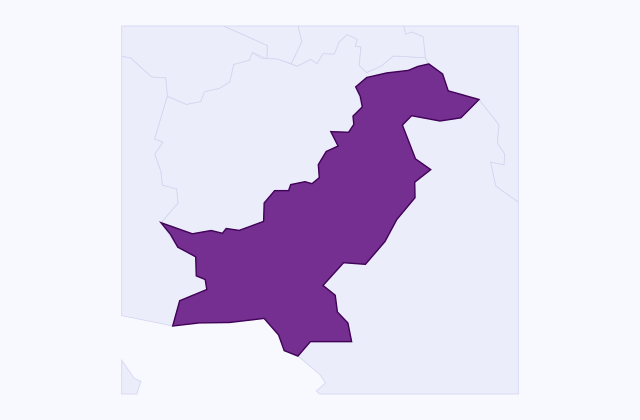
The legal framework
The framework rests on the Prevention of Electronic Crimes Act 2016, which criminalises defamation, cyberstalking and non-consensual distribution of intimate images, and empowers the regulator to order removals. PECA has been criticised for its use against journalists and critics, while also providing the main practical route for victims of online harassment.
Key points
| Defamation | Civil in all of these jurisdictions; criminal defamation retained in some |
|---|---|
| Cyberharassment | Criminalised by cybercrime legislation |
| Intimate images | Non-consensual distribution is an offence |
| Platform removal | Usually faster than any legal route; use it first |
| Risk to speakers | Cybercrime provisions have been used against journalists and critics in several of these countries |
| Evidence | Screenshots with URL and date are the foundation of any complaint |
| PECA | Contains offences covering defamation, harassment and dignity online |
| Defamation Ordinance | Provides civil remedies alongside the criminal route |
| Blocking | The telecom regulator can order content blocked |
| Concerns | The framework has been criticised for use against journalists |
In practice
- Capture evidence first: full screenshots with URL, date and surrounding context, before anything is deleted.
- Report to the platform and keep the reference number and the outcome.
- Then use the legal route — the order matters, because platforms act faster than courts.
- Do not respond in kind: your own posts become evidence too.
- Report to the FIA Cybercrime Wing with screenshots and links.
- Ask the telecom regulator for blocking where the content is hosted abroad.
Cost and coverage
Police complaints are free; civil defamation actions are expensive.
Recent changes
Regional courts — including the ECOWAS Court and the African Court — have pressed for the decriminalisation of defamation, and several countries in the region have moved in that direction.
Where to go
- FIA Cybercrime Wing complaint portal and helpline.
- Digital Rights Foundation Cyber Harassment Helpline.
- Pakistan Telecommunication Authority for content removal.
Worth knowing
Two habits protect you in these jurisdictions: document what you receive, and think twice about what you post. Cybercrime provisions are used in both directions, and an angry reply can turn a complainant into a defendant. The same provisions used to protect individuals have been used against journalists and critics. Frame complaints around the specific harm to you personally.
Official sources and links
- Government of Pakistan — official government portal