
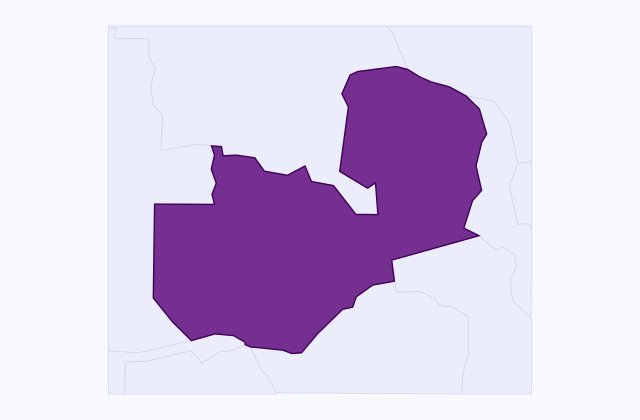
The legal framework
Zambia criminalises same-sex conduct with maximum penalties reaching life imprisonment for the principal offence, and unlike in several neighbouring countries prosecutions and convictions do take place. There is no marriage, civil union or partnership, no recognition of foreign unions, and no organisation able to operate openly on the issue.
Zambia differs from most of its neighbours in that the law is actively applied rather than symbolic. That changes the practical calculation for a couple: the risk is not only social, and the absence of any organisation able to work openly means there is no intermediary between an individual and the criminal process.
Key points
| Marriage | Not available; the Constitution defines marriage as between a man and a woman |
|---|---|
| Criminal law | Very heavy maximum penalties, up to life imprisonment |
| Enforcement | Prosecutions and convictions have occurred |
| Union alternative | None |
| Foreign marriage | Not recognised |
| Adoption | Not available to same-sex couples |
| Support | Available in practice only through health services |
In practice
- No union of any kind can be registered in the country.
- A marriage celebrated abroad has no effect here: no spousal visa, no inheritance, no say in hospital.
- The documents that protect a couple — will, power of attorney, nominations — must be made in the country of residence.
- Digital caution is a safety measure: messages, photographs and dating applications.
Cost and coverage
There is no union to register. Where support exists it comes through health programmes framed around HIV rather than through rights organisations.
Recent changes
Political statements have repeatedly reaffirmed the criminal position, and no reform is under consideration; prosecutions continue to be reported.
Where to go
- Consulate of your country of nationality, for consular protection.
- Regional and international human rights organisations.
- Local lawyer, as soon as any proceedings begin.
Worth knowing
Zambia is one of the countries where the provisions are not dormant: cases have been brought, including following press reports, and public statements by officials have reinforced the position.
Frequently asked questions
Are the laws actually enforced?
Yes. Cases have been brought and convictions handed down, which distinguishes Zambia from countries where comparable provisions are dormant. Arrests have followed complaints and, in some cases, press coverage.
Is there any support available?
Not through rights organisations, which cannot operate openly. Health services, particularly those framed around HIV prevention and treatment, are the usual point of contact and are used as such.
Official sources and links
- UN Human Rights Office — ratified treaties and country reviews
- ILO NATLEX — national legislation database