
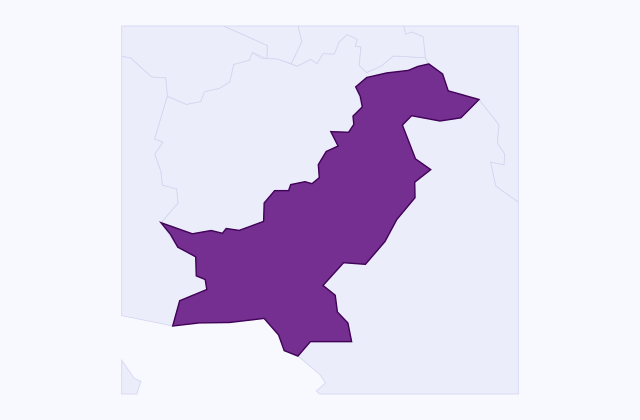
The legal framework
A Muslim marriage is constituted by the nikah, recorded in the nikahnama and registered by a licensed nikah registrar with the union council. The nikahnama contains clauses of real legal significance, including delegated divorce and dower, which are too often left blank. Christian and Hindu marriages follow their own statutes, Hindu marriages having been given a registration framework in 2017.
Key points
| Nikah | The marriage itself; the nikahnama is its record |
|---|---|
| Registration | With the union council through a licensed registrar |
| Nikahnama clauses | Dower, delegated right of divorce, conditions — read every clause before signing |
| Christian marriages | Christian Marriage Act 1872, registered by licensed ministers |
| Hindu marriages | Hindu Marriage Act 2017, with a registration system |
| Minimum age | 18 for men; 16 in most provinces for women, 18 in Sindh |
| Union council | Registration is with the union council, not the mosque |
| Dower | Prompt and deferred dower should both be specified |
In practice
- Check that the person conducting the ceremony is legally authorised to do so: that single fact usually decides whether you are married.
- Give the required notice to the civil authority in advance — the waiting periods are strict.
- Make sure the marriage is registered afterwards and obtain several certified copies.
- If the ceremony has no civil effect, put a written agreement in place to protect the financially weaker partner.
- Obtain the registered nikahnama from the union council, not just the registrar's copy.
Where to go
- Union council office for registration.
- Nikah registrar licensed by the union council.
- Legal aid organisations and women's rights groups.
Worth knowing
Clause 18 of the nikahnama, delegating the right of divorce to the wife, is frequently struck out without the bride's knowledge. Read every clause yourself before signing. The clauses of the nikahnama are the wife's main protection. Leaving them blank or allowing them to be struck out gives away enforceable rights.
Official sources and links
- Government of Pakistan — official government portal