
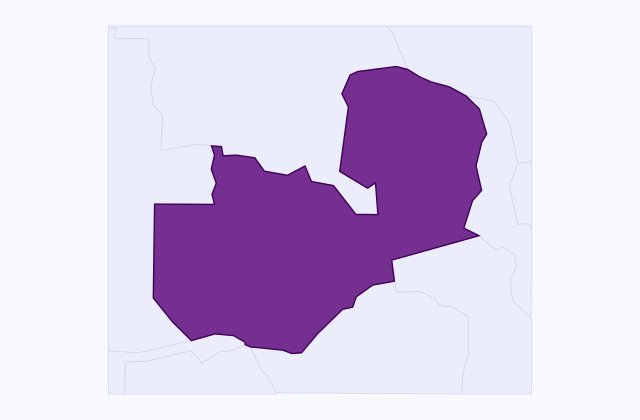
The legal framework
The penal code criminalises same-sex acts with maximum penalties running from fourteen years to life imprisonment, and prosecutions have been brought. There is no protection against discrimination, public discourse is hostile, and organisations operate almost entirely through health programmes.
Zambia criminalises same-sex conduct under provisions carrying very heavy maximum penalties — up to life imprisonment for the principal offence — and, unlike in some neighbouring states, prosecutions do occur. Political statements have reinforced the position, and there is no organisation able to operate openly on the issue. Support, where it exists, comes through health services framed around HIV rather than through rights organisations.
Key points
| Criminal law | Fourteen years to life imprisonment under the penal code |
|---|---|
| Discrimination | No legal protection on grounds of sexual orientation |
| Marriage and unions | Not available |
| Organisations | Operate under legal and financial pressure, often through health programmes |
| Extortion | Common, usually arranged through dating applications |
| Health care | Testing and treatment remain accessible without disclosure |
| Travellers | The law applies to visitors and foreign residents |
In practice
- Do not keep messages, images or application profiles that could expose you.
- Treat meetings arranged online with strangers as high risk.
- Health and testing programmes continue and do not require any declaration.
- If arrested, ask for a lawyer and do not sign a statement you have not read.
Cost and coverage
Health services remain accessible at low cost; legal defence is expensive, though organisations sometimes fund it.
Where to go
- Non-governmental health and testing programmes.
- Human rights organisations, including regional ones.
- Lawyers experienced in these prosecutions.
Worth knowing
Extortion and eviction are far more frequent than prosecution. Both usually start from a phone or a landlord, which is where practical precautions matter most.
Frequently asked questions
Are the laws actually enforced in Zambia?
Yes, cases have been brought and convictions handed down, which distinguishes Zambia from countries where comparable provisions are dormant. Arrests have followed complaints and, in some cases, media reporting. This is not a theoretical risk.
What practical precautions make sense?
Assume that anything written down can be read: dating profiles, messages, photographs, cloud backups. Meet new people in public, tell someone where you are going, and be cautious with anyone who moves quickly to demands for photographs or money — blackmail using images is the most common harm reported. Know which organisation you would contact before you need it, and keep the number somewhere other than your phone.
Official sources and links
- UN Human Rights Office — ratified treaties and country reviews
- ILO NATLEX — national legislation database