
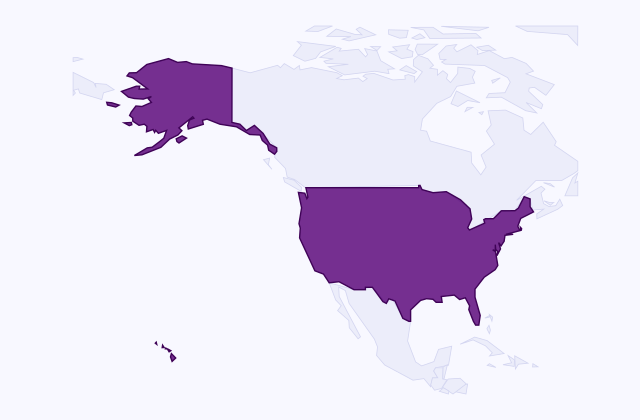
The legal framework
Since 2022 a three-digit number reaches the national suicide and crisis lifeline from any phone, by call or text, at any hour. Beyond crisis, access depends on your insurance: federal parity law requires mental health benefits to match medical ones, but narrow provider networks and a shortage of therapists mean many people pay out of network. Community mental health centres and federally qualified health centres charge on a sliding scale.
Key points
| Crisis line | Three-digit national lifeline, by call or text, at any hour |
|---|---|
| Parity law | Federal law requires mental health benefits to match medical benefits |
| Networks | Narrow provider networks push many patients out of network |
| Sliding scale | Community health centres charge according to income |
| Shortage | Therapist shortages create long waits even with good insurance |
| Involuntary commitment | Rules and duration vary by state |
| Teletherapy | Widespread, and often the fastest route to a first appointment |
In practice
- The three-digit lifeline works from any phone, by call or text, and can dispatch a mobile crisis team in many areas.
- Check whether your plan has an out-of-network benefit: many therapists do not take insurance directly.
- Federally qualified health centres charge on a sliding scale regardless of insurance status.
- Teletherapy platforms are often weeks faster than an in-person appointment.
Cost and coverage
Cost depends on insurance; community health centres charge on a sliding scale, and the crisis lifeline is free.
Recent changes
The three-digit crisis lifeline, launched in 2022, replaced the old ten-digit number and now handles millions of contacts a year.
Where to go
- National suicide and crisis lifeline, three digits, at any hour.
- Community mental health centres and federally qualified health centres.
- Employee assistance programmes, which often fund several free sessions.
Worth knowing
Parity law exists but is unevenly enforced. If your insurer refuses a mental health claim it would have paid for a physical condition, that refusal can be appealed, and the appeal often succeeds.
Official sources and links
- USA.gov — official guide to government services
- Congress.gov — federal legislation