
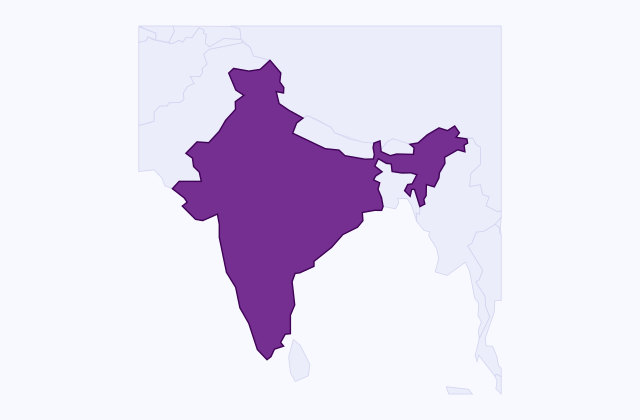
The legal framework
The Mental Healthcare Act of 2017 established a right to mental health care, required informed consent and advance directives, and effectively decriminalised attempted suicide by presuming severe stress. A national tele-mental health programme provides free counselling by phone in many languages. Implementation remains uneven, the treatment gap is very large, and district mental health programmes carry most of the public load.
Key points
| Legal right | The 2017 Act establishes a right to mental health care |
|---|---|
| Attempted suicide | Effectively decriminalised: severe stress is presumed |
| Advance directives | Legally recognised, allowing you to state treatment preferences in advance |
| National tele-counselling | Free, in many languages, at any hour |
| District programmes | The main route to public care outside big cities |
| Insurance | Insurers are required to cover mental illness like physical illness |
| Treatment gap | Very large: most people with a diagnosable condition receive no care |
In practice
- The free national tele-counselling line operates in many languages and is a genuine first step.
- Health insurance must cover mental illness: a refusal on that ground can be challenged.
- District mental health programmes provide free medication and consultations.
- An advance directive lets you record now how you wish to be treated in a future crisis.
Cost and coverage
Public district programmes provide free consultations and medication; the tele-counselling line is free.
Recent changes
The 2017 Act is among the most far-reaching mental health statutes in the region, though implementation lags well behind the text.
Where to go
- National tele-mental health helpline, free and multilingual.
- District mental health programme clinics.
- Non-governmental organisations providing free counselling and crisis support.
Worth knowing
Insurers long refused mental health claims outright. That is now unlawful, and complaints to the insurance regulator on this point have repeatedly succeeded.
Official sources and links
- India.gov.in — national portal of India
- India Code — central and state legislation