
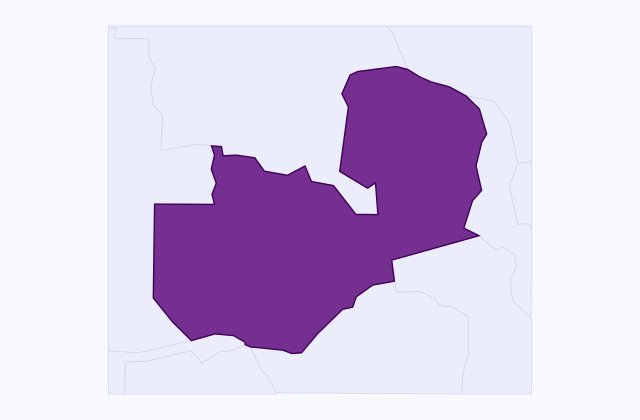
The legal framework
The framework rests on the Cyber Security and Cyber Crimes legislation, which criminalises cyber harassment and the distribution of intimate images, alongside civil defamation. Criminal defamation of the President was repealed in 2022, a significant free expression reform.
Key points
| Defamation | Civil in all of these jurisdictions; criminal defamation retained in some |
|---|---|
| Cyberharassment | Criminalised by cybercrime legislation |
| Intimate images | Non-consensual distribution is an offence |
| Platform removal | Usually faster than any legal route; use it first |
| Risk to speakers | Cybercrime provisions have been used against journalists and critics in several of these countries |
| Evidence | Screenshots with URL and date are the foundation of any complaint |
| Defamation of the President repealed | Removed from the penal code in 2022 |
| Cyber legislation | Renewed in 2025, with offences covering harassment and false information |
| Civil defamation | Available in the High Court |
| Concerns | The cyber framework has been criticised for breadth and surveillance powers |
In practice
- Capture evidence first: full screenshots with URL, date and surrounding context, before anything is deleted.
- Report to the platform and keep the reference number and the outcome.
- Then use the legal route — the order matters, because platforms act faster than courts.
- Do not respond in kind: your own posts become evidence too.
- Preserve evidence carefully; the offences turn on the precise content and its reach.
- For reputational harm, civil proceedings remain available.
Cost and coverage
Police complaints are free; civil defamation actions are expensive.
Recent changes
Regional courts — including the ECOWAS Court and the African Court — have pressed for the decriminalisation of defamation, and several countries in the region have moved in that direction.
Where to go
- Zambia Police cybercrime unit.
- Zambia Information and Communications Technology Authority.
- Bloggers of Zambia and other digital rights organisations.
Worth knowing
Two habits protect you in these jurisdictions: document what you receive, and think twice about what you post. Cybercrime provisions are used in both directions, and an angry reply can turn a complainant into a defendant. The offence of defaming the President was repealed in 2022, but broadly drafted cyber offences have replaced it as the main risk for online speech.
Official sources and links
- UN Human Rights Office — ratified treaties and country reviews
- ILO NATLEX — national legislation database